
The Indispensable Role of Quality Assurance in Modern Game Design
What you'll learn
 Evolution of Game QACore Responsibilities of QAImpact of QA on Business OutcomesIntegrating QA into Development
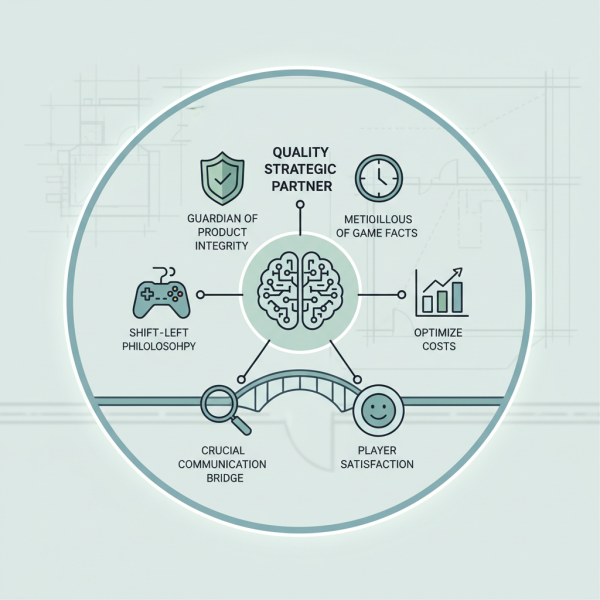
The role of Quality Assurance (QA) has transcended its traditional image. Far from being just bug catchers at the tail end of production, today's QA agents are integral, strategic partners whose contributions are critical to a game's success. For Software Engineering Managers, understanding the comprehensive scope of a QA agent's responsibilities and the profound impact they have on project timelines, budget, and ultimately, player satisfaction, is paramount. This article delves into the multifaceted duties of a QA agent and illuminates why their expertise is an indispensable pillar in crafting exceptional interactive experiences.
What is a Quality Assurance Agent?
At its core, a Quality Assurance Agent in game development is an advocate for the player experience and the ultimate guardian of product integrity. Their primary objective extends beyond merely finding defects; it encompasses ensuring that a game meets its design specifications, functional requirements, and overall quality standards. They meticulously evaluate every facet of the game, from core mechanics and graphical fidelity to sound design and user interface, all while maintaining a user-centric perspective. They are tasked with identifying discrepancies between what the game is intended to do and what it actually does, as well as anticipating potential issues that could detract from enjoyment or lead to technical failures.
The Evolution of QA in Game Development
The landscape of game QA has undergone a significant transformation. Historically, QA was often a siloed, late-stage activity, relegated to a final polish pass before release. This reactive approach frequently led to costly last-minute fixes and missed deadlines. Modern game development, particularly with the advent of agile methodologies, live service games, and continuous integration, demands a proactive and integrated QA strategy. Today, QA agents are involved much earlier in the development lifecycle, participating in design reviews, providing feedback on prototypes, and helping to define testable requirements. This "shift-left" philosophy ensures that quality is built in from the ground up, rather than bolted on at the end, leading to more robust products and more efficient development cycles.
Key Responsibilities and Activities
The daily life of a QA agent is dynamic and varied, involving a blend of analytical thinking, technical understanding, and creative problem-solving. Their core responsibilities include:
- Test Case Design and Execution: Developing detailed test plans and individual test cases based on design documents, user stories, and functional specifications, then meticulously executing these tests to validate functionality.
- Defect Reporting and Tracking: Documenting bugs with clear, reproducible steps, relevant logs, and severity assessments, then tracking their lifecycle from identification to verification of the fix.
- Regression Testing: Repeatedly testing previously fixed issues and existing functionalities to ensure that new code changes have not introduced new bugs or reintroduced old ones.
- Performance Testing: Evaluating game performance under various conditions, including frame rates, load times, network latency (for online games), and memory usage, to ensure a smooth and stable experience.
- Usability and User Experience (UX) Testing: Assessing the intuitiveness, accessibility, and overall enjoyment of the game from a player's perspective, providing feedback on UI/UX elements, control schemes, and game flow.
- Compatibility Testing: Ensuring the game functions correctly across a wide range of hardware configurations, operating systems, input devices, and regional settings.
- Collaboration and Communication: Acting as a crucial communication bridge between development, design, and product teams, translating technical issues into actionable insights for designers and bug reports for engineers.
Why QA is Critical in Modern Game Design
The criticality of QA in contemporary game design cannot be overstated, especially when considering the significant investments in development and the intense scrutiny from players and critics alike. A robust QA process directly impacts several key business outcomes:
Protecting Player Experience and Retention: In an era where a single buggy patch can lead to widespread player dissatisfaction and negative reviews, QA is the frontline defense. A polished, stable game fosters player trust, enhances immersion, and encourages long-term engagement, which is vital for the success of live service titles and building a loyal community.
Safeguarding Brand Reputation and Market Perception: A game riddled with bugs at launch can irrevocably tarnish a studio's reputation, leading to decreased sales for future titles and a loss of investor confidence. QA ensures the product delivered to market upholds the studio's commitment to quality, maintaining a positive brand image in a highly competitive industry.
Optimizing Development Costs and Timelines: The axiom "the earlier a bug is found, the cheaper it is to fix" holds immense weight in game development. Bugs discovered late in the cycle, or worse, post-launch, incur exponentially higher costs in terms of developer hours, emergency patches, and potential legal or contractual penalties. Proactive QA minimizes these costly reworks and helps keep projects on schedule and within budget.
Ensuring Compliance and Certification: Many platforms, particularly console manufacturers, have stringent technical requirements and certification processes (e.g., TRCs for PlayStation, XR for Xbox). QA teams are instrumental in verifying that a game adheres to these standards, preventing costly delays or outright rejection from platform holders.
Driving Innovation and Competitive Advantage: By freeing developers to focus on creative problem-solving rather than constant bug-fixing, QA indirectly supports innovation. A reliable quality gate allows for more ambitious features to be implemented with confidence. In a crowded market, a superior quality product often stands out as a key differentiator.
Integrating QA into the Development Lifecycle
For Software Engineering Managers, integrating QA seamlessly into the development lifecycle is key to leveraging their full potential. This involves treating QA as a peer discipline, embedding them within scrum teams, and fostering an environment of shared responsibility for quality. Encouraging QA to participate in daily stand-ups, sprint planning, and retrospectives ensures that their insights are heard and acted upon early. Furthermore, empowering QA with access to development tools, build pipelines, and documentation strengthens their ability to contribute effectively and proactively prevent issues.
Summary
The role of a Quality Assurance Agent in modern game design is far more sophisticated and critical than often perceived, extending beyond simple bug detection to encompass a comprehensive guardianship of the player experience and product integrity. Their proactive involvement throughout the development lifecycle, from initial concept to post-launch support, is indispensable for mitigating risks, optimizing costs, protecting brand reputation, and ultimately delivering high-quality, engaging games to an increasingly discerning global audience. For Software Engineering Managers, recognizing and fully integrating this vital function is not just about ensuring a stable product, but about securing a competitive edge and fostering long-term success in the dynamic game industry.
Comprehension questions
 How has the role of Quality Assurance in game development evolved from its historical perception?List three key responsibilities of a modern Quality Assurance Agent in game design.Explain how proactive QA contributes to optimizing development costs and timelines.