
Mastering Your Schedule: Identifying and Eliminating Unproductive Time Sinks for Engineering Managers
What you'll learn
 Understanding Unproductive Time SinksCommon Unproductive Time SinksStrategies for IdentificationTactics for Mitigation and Elimination
Introduction
In the dynamic world of software engineering management, time is arguably your most precious resource. Days are often a whirlwind of meetings, code reviews, team interactions, and strategic planning. Amidst this complexity, it's remarkably easy for unproductive time sinks to creep into your schedule, silently siphoning away hours that could be dedicated to high-impact activities. These are not always obvious distractions; sometimes they masquerade as essential tasks, making them particularly insidious. Learning to accurately identify these hidden drains is the first critical step toward reclaiming control of your day, enhancing your team's productivity, and fostering a more strategic leadership approach.
The Hidden Drain: Understanding Unproductive Time Sinks
An unproductive time sink can be defined as any activity, recurring or spontaneous, that consumes a significant amount of your time without delivering commensurate value or contributing to your strategic objectives. For an engineering manager, these aren't just social media scrolling or endless coffee breaks; they often involve activities that feel productive but are, in reality, inefficient, redundant, or could be handled more effectively by others or through different processes.
The challenge lies in their often subtle nature. Many time sinks emerge from good intentions – a desire to be helpful, to be thorough, or to stay informed. However, without critical evaluation, these can quickly become entrenched habits or systemic inefficiencies that hinder rather than help. Identifying them requires a deliberate shift from simply being busy to critically assessing the value and necessity of each task and interaction.
Common Unproductive Time Sinks for Engineering Managers
While specific situations vary, several common time sinks frequently plague engineering managers:
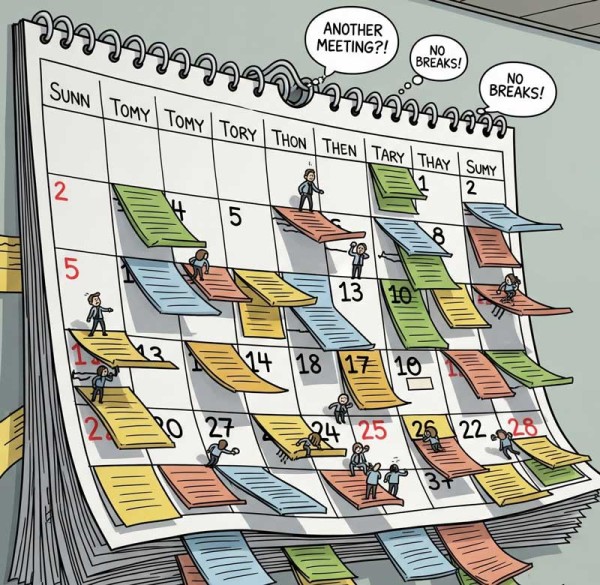
- Excessive or Ineffective Meetings: Meetings without clear agendas, objectives, or defined outcomes often run long, involve too many people, or are held for information dissemination that could be an email. These can consume a disproportionate amount of your day and energy.
- Context Switching Overload: Constantly jumping between disparate tasks – from a technical deep-dive to a HR issue, then to a budget review – significantly reduces cognitive efficiency and increases the time taken to complete each task.
- Perfectionism and Over-analysis: Spending too much time refining a document, overthinking a decision, or trying to achieve an impossible level of perfection can delay progress and prevent delegation. While quality is vital, there’s a point of diminishing returns.
- Reactive Management (Firefighting): Spending the majority of your day responding to urgent, unplanned issues rather than proactively planning and executing. This indicates a lack of preventative measures or effective delegation within the team.
- Unfocused Communication Channels: Being constantly interrupted by instant messages, non-critical emails, or ad-hoc questions that could be batched or self-served.
- Unstructured One-on-Ones: While essential, 1:1s without a clear structure or shared understanding of topics can drift, failing to address critical development or performance areas effectively.
Strategies for Identification
Pinpointing these elusive time sinks requires a methodical approach. It’s not enough to feel busy; you need data and self-reflection.
Time Auditing and Logging
For a period of 1-2 weeks, meticulously log how you spend your time. This doesn't mean just noting "meeting," but rather "meeting - sprint planning, 1 hour, achieved clear goals" versus "meeting - ad-hoc discussion, 45 mins, no clear outcome." Categorize activities by their nature and perceived value. Tools or even a simple spreadsheet can facilitate this. This exercise often reveals surprising patterns and exposes where time is genuinely going.
Energy Mapping
Beyond just logging time, consider logging your energy levels associated with each task. Some activities, though perhaps necessary, drain your energy disproportionately, making subsequent tasks harder. Identifying these can help you strategically place them in your schedule or find ways to make them less taxing.
Feedback Loops
Engage with your team and peers. Ask your direct reports if they feel they get timely decisions or if they often wait for your input. Solicit feedback from peers on your responsiveness or collaboration styles. Sometimes others can spot inefficiencies in your workflow that you're too close to see.
Reviewing Calendar and Task Lists
Regularly (weekly or bi-weekly) review your past calendar entries and completed task lists. For each item, ask: Was this truly necessary? Could it have been done differently? Could someone else have done it? What was the actual outcome or value generated?
Tactics for Mitigation and Elimination
Once identified, the next step is to act. Eliminating time sinks isn't about working harder; it's about working smarter and more deliberately.
Meeting Hygiene
Meetings are often the biggest culprit. Implement strict meeting hygiene:
- Always have a clear agenda and stated objectives shared beforehand.
- Invite only essential participants. Fewer people often lead to more focused discussions.
- Set a strict time limit and stick to it.
- Assign action items and owners with clear deadlines before concluding.
- Consider if a meeting is truly necessary, or if an email or async communication could suffice.
Batching Similar Tasks
Minimize context switching by grouping similar tasks together. Dedicate specific blocks of time for communication (emails, Slack), administrative tasks, or deep work. For example, check and respond to emails twice a day rather than constantly throughout the day.
Effective Delegation and Empowerment
Many "urgent" tasks that land on an engineering manager's desk can be delegated. Empower your team members by providing them with the necessary context, autonomy, and support to take ownership. This not only frees up your time but also fosters growth within your team.
Setting Clear Boundaries
Protect your focus time. Use "do not disturb" modes, block out deep work slots in your calendar, and communicate your availability. Teach your team when and how to interrupt you for truly urgent matters versus routine questions.
Utilizing Tools for Focus and Communication
Leverage productivity tools to manage tasks, streamline communication, and reduce cognitive load. Project management software, clear documentation, and collaborative platforms can help reduce unnecessary interactions and clarify responsibilities.
Regular Schedule Review
Make schedule review a habitual practice. Just as you review sprint performance, review your personal productivity and time allocation. Adjust and refine your strategies as needed; what works one quarter might need tweaking the next.
Summary
For Software Engineering Managers, mastering time management is paramount for both personal effectiveness and team success. Unproductive time sinks, often disguised as necessary activities, can silently erode your day. By understanding common time-wasting patterns, employing systematic identification strategies like time auditing and feedback, and implementing proactive mitigation tactics such as rigorous meeting hygiene and effective delegation, managers can reclaim valuable hours. This strategic approach not only boosts individual productivity but also sets a powerful example for the entire engineering organization, fostering a culture of efficiency and deliberate action.
Comprehension questions
 What is one common characteristic of unproductive time sinks that makes them difficult to identify?Name three common unproductive time sinks specifically relevant to Software Engineering Managers.Describe two distinct strategies for identifying time sinks mentioned in the article.What are some key practices for improving meeting efficiency as discussed in the article?