
Requirement Gathering for Video Game Features
What you'll learn
 Game-Specific Requirement ChallengesKey Gathering TechniquesAvoiding Common PitfallsDocumentation Best Practices
Effective requirement gathering is the bedrock of successful software development, and in the dynamic, often subjective world of video game creation, its importance is amplified. As Software Engineering Managers, ensuring your teams are building the right features, and building them right, begins long before a single line of code is written. This article explores common techniques for eliciting, analyzing, and documenting requirements for new features within a video game, highlighting the unique challenges and critical considerations inherent to the interactive entertainment industry. Mastering this phase can significantly reduce rework, mitigate risks, and lead to more polished, player-centric outcomes.
Understanding the Unique Landscape of Game Development Requirements
Unlike traditional enterprise software, game feature requirements often stem from an artistic vision or a desired player experience rather than a purely functional business process. This introduces elements of subjectivity and an iterative design philosophy that must be embraced during requirement gathering. Features must not only function correctly but also feel "fun," "engaging," or "immersive." This necessitates a different approach to discovery and validation.
Key stakeholders extend beyond technical teams to include game designers, artists, audio engineers, producers, and often external user groups or community managers. Each brings a vital, yet sometimes conflicting, perspective. The challenge lies in harmonizing these viewpoints into a cohesive, actionable set of requirements that align with the overall game vision and technical capabilities.
Key Techniques for Requirement Gathering
Employing a diverse toolkit of techniques is crucial for comprehensive requirement gathering in game development:
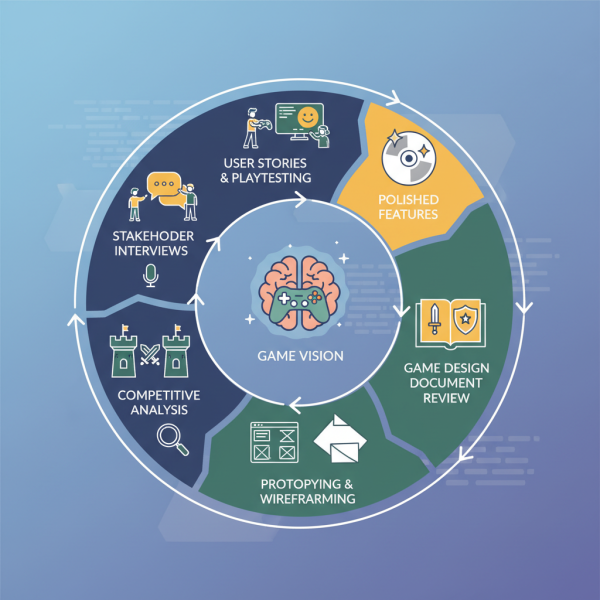
- Stakeholder Interviews: Conduct structured interviews with all relevant parties – lead designers, artists, producers, QA leads, and engineering leads. Focus on understanding the "why" behind a feature, its core purpose, and its desired impact on the player and the game as a whole. Ask open-ended questions about user stories, edge cases, and success metrics.
- User Stories and Playtesting: Frame requirements from the perspective of the player (e.g., "As a player, I want to customize my character's armor so I can express my unique style"). Couple these with early and frequent playtesting of prototypes or mock-ups. Player feedback is invaluable for validating assumptions, identifying usability issues, and surfacing implicit requirements that no stakeholder interview could reveal.
- Prototyping and Wireframing: Visualizing a feature early through interactive prototypes (even paper-based ones), wireframes, or rough in-engine mock-ups helps clarify complex interactions, validate user flows, and identify potential design flaws before significant engineering effort is expended. This is particularly effective for UI/UX elements, new mechanics, or level designs.
- Competitive Analysis: Research how similar features are implemented in other successful or even unsuccessful games. Analyze their strengths and weaknesses, player reception, and technical execution. This can provide valuable insights into best practices, potential pitfalls, and opportunities for innovation, helping to define the scope and quality expectations.
- Game Design Document (GDD) Review: The GDD serves as the central blueprint for the game. Thoroughly review relevant sections for feature descriptions, lore, mechanics, and art direction. While GDDs provide high-level vision, requirement gathering translates these into concrete, implementable specifications. Identify ambiguities or gaps that need further clarification.
What to Look Out For: Pitfalls and Best Practices
During the requirement gathering process, certain warning signs and best practices demand your attention:
- Ambiguity and Scope Creep: Game features are prone to abstract descriptions ("make it more fun," "better feel"). Challenge vague statements by asking for concrete examples, desired outcomes, and measurable criteria. Establish clear "definition of done" for features to combat scope creep, which is a constant threat in creative endeavors.
- Technical Feasibility and Constraints: Involve engineering leads early and often. New features can introduce significant performance overhead, require new engine systems, or clash with existing architecture. Early technical evaluation can prevent costly rework or outright cancellation later in the development cycle. Understand the engine's capabilities and limitations.
- Balancing Player Experience vs. Developer Constraints: The "dream" feature might be technically unfeasible or require an disproportionate amount of development time. Facilitate conversations between design and engineering to find creative solutions, prioritize core functionality, and manage expectations. Often, a simpler, well-executed feature provides more value than an over-ambitious one.
- Hidden Non-Functional Requirements: Don't overlook non-functional aspects like performance targets (frame rate, load times), scalability (multiplayer features), security (anti-cheat, data protection), accessibility (colorblind modes, remappable controls), and localization. These often emerge late if not explicitly explored and can be challenging to retrofit.
- Versioning and Iteration: Acknowledge that requirements in game development are rarely static. Plan for iterations and allow for controlled changes. Establish clear change management processes to track modifications and their impact on scope, schedule, and resources.
Leveraging Tools and Documentation
Effective documentation and tool usage are paramount for managing game feature requirements. Utilize project management tools like Jira, Trello, or Azure DevOps to track user stories, tasks, and bugs, linking them directly to higher-level feature specifications. Collaboration platforms such as Confluence or custom wikis are excellent for housing detailed design specifications, technical breakdowns, and decision logs. Ensure these documents are living, regularly updated, and accessible to all stakeholders. Consistency in terminology and format across all documentation sources is vital for clarity and reducing misinterpretations.
Summary
Requirement gathering for video game features demands a nuanced approach, blending traditional software engineering rigor with an appreciation for creative vision and player experience. By actively engaging diverse stakeholders, leveraging techniques like stakeholder interviews, user stories, playtesting, and prototyping, and being vigilant for common pitfalls such as ambiguity and scope creep, Software Engineering Managers can guide their teams toward delivering impactful and high-quality game features. Establishing clear communication channels, fostering a culture of early technical validation, and maintaining robust, living documentation are key pillars to navigating the complexities of game development and ensuring project success.
Comprehension questions
 Why is requirement gathering for video game features considered more complex or unique compared to traditional enterprise software?Name and describe two specific techniques mentioned for gathering requirements in game development.What are some common pitfalls or warning signs Software Engineering Managers should look out for during the requirement gathering process?How does early involvement of engineering leads benefit the requirement gathering phase for game features?