
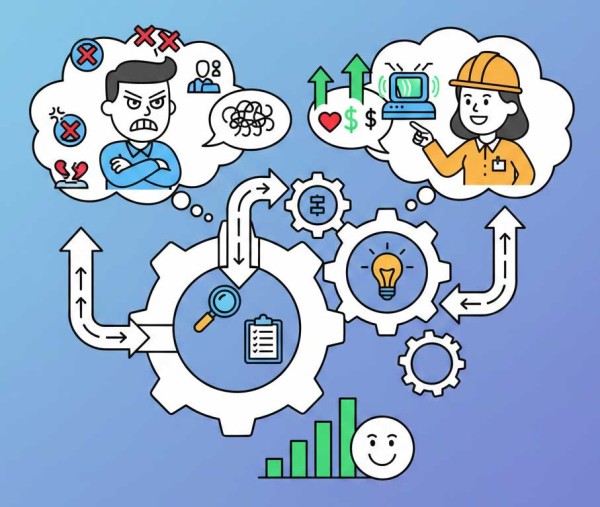
Turning Customer Complaints into Actionable Data
What you'll learn
 Empathy in ManagementData-Driven FeedbackComplaint SystematizationContinuous Product Improvement
The Unspoken Opportunity in Customer Complaints
Customer complaints often feel like a burden, a drain on resources, or even a personal affront. However, the most astute managers understand that these complaints are not just problems to be solved, but invaluable data points and direct lines of feedback, offering a roadmap for product improvement and enhanced customer loyalty. The key to unlocking this potential lies in a powerful, yet often underutilized, skill: empathy. By approaching customer feedback with genuine understanding and a structured process, engineering managers can transform frustration into actionable insights, fueling a culture of continuous improvement within their teams and products.
The Empathy Imperative for Engineering Leaders
Empathy is more than just feeling sorry for a frustrated customer; it's about understanding their perspective, their pain points, and the impact your software has on their daily operations or personal lives. For software engineering managers, cultivating this empathy serves multiple critical purposes. It fosters a healthier relationship with the customer, builds trust, and provides a deeper context for technical problems.
Furthermore, an empathetic manager inspires their team to adopt a similar customer-centric mindset. When engineers understand the human impact of a bug or a missing feature, their motivation to deliver high-quality solutions increases. It transforms abstract code into a tangible solution for a real person, boosting team morale and fostering a sense of purpose beyond technical execution.
Active Listening and Meaningful Acknowledgment
The first step in showing empathy is to truly listen. This means moving beyond a defensive stance or a rush to technical solutions. It involves allowing the customer to fully articulate their issue, recognizing the emotional component of their complaint, and validating their experience without immediately promising a fix.
- Prioritize Understanding Over Response: Before formulating any response, ensure you fully grasp the customer's situation, the impact it's having, and their underlying need. Ask clarifying questions to dig deeper into the 'why' behind the 'what'.
- Validate Their Feelings: Simple phrases like "I understand how frustrating that must be" or "I hear your concern about X" can defuse tension and make customers feel heard. This doesn't mean agreeing with their every statement, but acknowledging their experience.
- Educate Your Team: Encourage engineering teams to listen to support calls, read complaint tickets, or even shadow customer interactions. Direct exposure helps engineers connect their work to real-world user experiences.
Structured Complaint Capture and Categorization
Once empathy has opened the door, the next crucial step is to systematically capture and categorize customer complaints. Raw complaints, no matter how emotionally charged, contain valuable data that can be structured and analyzed. This moves customer feedback from anecdotal stories to quantifiable trends.
Implement or refine existing ticketing systems to ensure complaints are logged consistently. Standardize the data points associated with each complaint. This includes not only the technical details but also the perceived business impact or user experience degradation. A well-designed system allows for robust analysis later.
Key data points to capture:
- Specific Feature/Module: Pinpoint the exact area of the software affected.
- Severity and Impact: Distinguish between a minor annoyance and a critical workflow blocker.
- Reproduction Steps: Clear instructions on how to replicate the issue, if applicable.
- Customer Segment/Tier: Understand if complaints are widespread or isolated to specific user groups.
- Date and Time: Track complaint frequency and identify potential correlations with releases or usage patterns.
- Customer Sentiment (Optional): If systems allow, categorize the emotional tone of the complaint.
Transforming Complaints into Actionable Data and Feedback Loops
With structured data, engineering managers can transform a reactive approach to complaints into a proactive strategy for product improvement. The goal is to move beyond fixing individual bugs to identifying systemic issues and opportunities for innovation.
Regularly analyze complaint data to identify patterns and trends. Are multiple customers reporting issues with the same feature after a recent update? Is there a recurring point of confusion for new users? This analysis provides the evidence needed to prioritize work effectively.
Establish clear feedback loops:
- Integrate into Backlog Grooming: Complaint trends and high-impact individual complaints should directly inform sprint planning and product roadmap decisions. Treat them as essential inputs, not just as reactive fire drills.
- Root Cause Analysis Workshops: For persistent or high-severity complaints, facilitate sessions where engineering and product teams can collaboratively investigate the underlying causes, not just the symptoms.
- Cross-Functional Reviews: Regularly meet with product, design, and customer support teams to discuss top complaints. This ensures a holistic understanding of the problem and fosters shared ownership of solutions.
- Quantify Impact: Translate complaints into quantifiable metrics wherever possible. How much productivity is lost due to a bug? How many support tickets does a confusing UI generate? This data strengthens the case for addressing issues.
Fostering a Culture of Continuous Improvement
The ultimate goal is to embed the lessons learned from customer complaints into the engineering culture, making it a continuous cycle of improvement. This means engineers should feel empowered, not punished, by customer feedback.
Share positive feedback and stories of how a fix directly helped a customer alongside critical complaints. Celebrate successful resolutions and the team's ability to turn a negative experience into a positive outcome. Make customer feedback visible, perhaps on dashboards or during regular team stand-ups, to keep the customer voice front and center.
Encourage engineers to propose solutions that not only fix the immediate problem but also prevent similar issues in the future. This transforms complaint management from a chore into an opportunity for innovation and strategic thinking.
Summary: Leveraging Empathy for Product Excellence
Effectively managing customer complaints is a cornerstone of successful software engineering. By embracing empathy, engineering managers can create a foundation of trust and understanding, moving beyond mere problem-solving to proactive product enhancement. This involves active listening, systematically capturing and categorizing complaint data, and establishing robust feedback loops that integrate customer insights directly into development processes. Ultimately, fostering a culture where customer feedback is seen as a gift, rather than a burden, drives continuous improvement, leading to more resilient software and happier customers.
Comprehension questions
 Why is empathy considered imperative for software engineering managers when dealing with customer complaints?What are some key data points that should be captured when systematically logging customer complaints?How can engineering managers transform raw complaint data into actionable insights for product improvement?What role do cross-functional reviews play in effectively addressing customer complaints and fostering continuous improvement?