
Mastering Continuous Integration as Software Engineering Managers
What you'll learn
 CI PrinciplesBenefits of CIImplementing CIAutomated Testing
Introduction to Continuous Integration
The concept of Continuous Integration (CI) has emerged as a cornerstone practice. For software engineering managers, understanding and effectively implementing CI is not merely about adopting a new tool; it's about fundamentally transforming a team's development workflow to enhance efficiency, reduce risk, and deliver higher-quality software at a consistent pace. This article will demystify Continuous Integration, elucidate its core principles, and highlight the tangible benefits your team stands to gain from its adoption.
What Exactly is Continuous Integration?
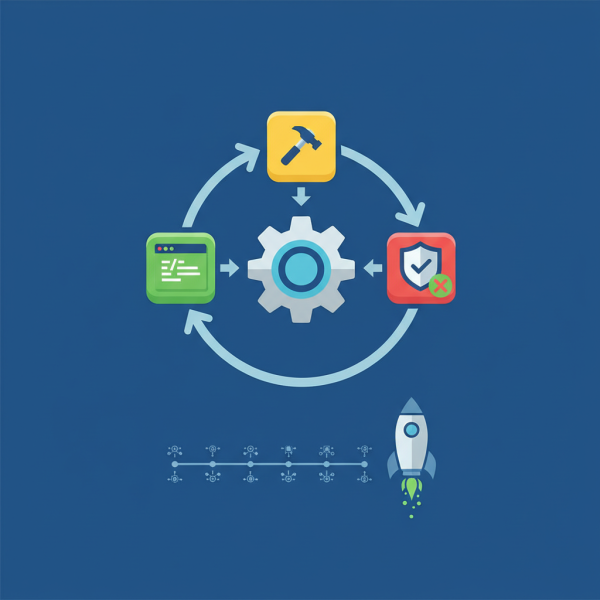
Continuous Integration is a software development practice where developers frequently merge their code changes into a central repository, typically multiple times a day. Each merge then triggers an automated build and a series of automated tests. The primary goal is to detect integration errors as quickly as possible, making them easier and less costly to fix. Instead of waiting for days or weeks to integrate large blocks of code, CI advocates for small, frequent integrations.
At its heart, CI relies on a robust version control system, automated build processes, and a comprehensive suite of automated tests. When a developer commits code, the CI server automatically pulls the latest changes, compiles the application, and runs a battery of tests—from unit tests to integration tests. If any step fails, the team is immediately notified, allowing for swift investigation and resolution before the issue escalates or becomes deeply embedded in the codebase.
The Pillars of an Effective CI Workflow
A successful Continuous Integration setup isn't just about having a CI server; it's about adhering to specific practices and principles:
- Maintain a Single Source Repository: All code lives in a version control system like Git, accessible to the entire team.
- Automate the Build: The process of compiling, packaging, and deploying the application should be fully automated and repeatable.
- Automate Testing: A comprehensive suite of automated tests (unit, integration, regression) must run with every build to validate functionality.
- Every Commit Triggers a Build: The CI system should automatically run a build and tests upon every code commit to the central repository.
- Fast Feedback: Teams must be immediately notified of build or test failures, ideally within minutes.
- Fix Broken Builds Immediately: A failing build is a top priority. No new code should be committed until the build is green again.
- Test in a Clone of Production Environment: Ensure that the build and test environment closely mirrors the production environment to catch configuration-specific issues.
Tangible Benefits for Your Software Engineering Team
Implementing Continuous Integration delivers a multitude of advantages that directly impact productivity, quality, and morale. For software engineering managers, these benefits translate into more predictable project outcomes and more efficient resource utilization.
Early Detection and Resolution of Defects
One of CI's most significant advantages is its ability to identify bugs and integration conflicts early in the development cycle. By frequently merging and testing, issues are caught when they are small and easy to isolate, dramatically reducing the time and effort required for debugging and remediation. This contrasts sharply with traditional approaches where integration might happen late, leading to "integration hell" and expensive, time-consuming fixes.
Improved Code Quality and Reliability
With automated testing as an integral part of every build, CI encourages developers to write more robust and testable code. The constant feedback loop helps maintain high code quality standards, ensuring that new features don't inadvertently break existing functionality. This leads to a more stable and reliable product overall.
Reduced Integration Problems and Technical Debt
Frequent, small integrations prevent large, complex merge conflicts that are common when developers work on isolated branches for extended periods. CI minimizes the accumulation of technical debt related to integration issues, allowing the team to focus on feature development rather than untangling complex codebases.
Faster Feedback Loops and Increased Developer Confidence
Developers receive immediate feedback on the impact of their changes. A green build provides confidence that their code is working as expected and hasn't introduced regressions. Conversely, a red build quickly alerts them to a problem, allowing them to address it while the context is fresh in their minds. This rapid feedback loop empowers developers and fosters a sense of ownership.
Enhanced Team Collaboration and Transparency
CI promotes a culture of shared responsibility and collaboration. With a central, always-up-to-date repository and transparent build statuses, everyone on the team has visibility into the project's health. This transparency reduces communication overhead and ensures that all team members are working with the most current version of the code.
Accelerated Development Velocity and Time-to-Market
By streamlining the integration and testing phases, CI removes bottlenecks and allows teams to develop and deliver features more quickly. The confidence gained from a continuously integrated and tested codebase also enables more frequent and reliable releases, shortening time-to-market for new functionalities and updates.
Cost Efficiency
While there is an initial investment in setting up CI infrastructure and writing automated tests, the long-term cost savings are substantial. Reduced debugging time, fewer critical production bugs, and a more efficient development process all contribute to significant cost efficiencies over the project lifecycle. Preventing a bug from reaching production is always cheaper than fixing it once it's live.
Implementing CI: A Manager's Perspective
As a manager, guiding your team towards a robust CI practice involves more than just selecting a tool. It requires:
- Cultural Shift: Emphasize the importance of frequent commits and immediate build failure resolution.
- Tooling Investment: Select a suitable CI server (e.g., Jenkins, GitLab CI, GitHub Actions, CircleCI) and ensure proper configuration.
- Test Automation: Prioritize the development of a comprehensive and fast automated test suite.
- Training and Support: Provide resources and training to help developers understand and effectively use the CI system.
- Monitoring and Iteration: Continuously monitor CI pipeline performance and iterate on the process to improve efficiency.
Summary
Continuous Integration is an indispensable practice in modern software engineering, offering a systematic approach to frequent code integration and automated testing. By adopting CI, software engineering managers can empower their teams to catch bugs early, improve code quality, foster collaboration, and accelerate delivery cycles. The benefits—ranging from enhanced team confidence and reduced technical debt to significant cost savings—make CI not just a best practice, but a critical strategic advantage for any development organization aiming for efficiency, reliability, and speed in software delivery.
Comprehension questions
 What is the primary goal of Continuous Integration?Name three key components or principles required for an effective CI workflow.How does Continuous Integration contribute to early detection and resolution of defects?Beyond technical aspects, what cultural shift does implementing CI require from a manager's perspective?