Assessing Employee Readiness for Task Delegation
- -->> 3. Assessing Employee Readiness for Task Delegation
What you'll learn
 Assessing Engineer ReadinessEffective Delegation StrategiesFostering Growth in Software EngineersObservational Leadership
As a Software Engineering Manager, one of your most critical responsibilities is fostering the growth of your direct reports. Effective delegation is a powerful tool for this, empowering engineers to take ownership, develop new skills, and contribute more significantly to the team's success. However, knowing precisely when an engineer is ready to handle more complex or critical delegated tasks isn't always straightforward. This article will explore key indicators, observational patterns, and strategic approaches to confidently assess your team members' readiness for increased responsibility, ensuring both their development and the project's success.
Beyond Basic Competence: Signs of Readiness
While basic competence is a prerequisite, readiness for increased delegation goes much deeper. Look for consistent demonstrations of excellence and a proactive mindset. An engineer who consistently meets or exceeds expectations on current tasks, delivering high-quality, well-tested code with minimal rework, is laying a strong foundation. They don't just complete assignments; they deliver robust, maintainable solutions.
Furthermore, observe their approach to problems. Do they simply fix the immediate issue, or do they investigate the root cause and propose preventative measures? Engineers ready for more will often anticipate potential pitfalls, consider edge cases, and think beyond the immediate scope of their tickets. They show a strong understanding of the system as a whole, not just their specific module.
A key indicator is also their willingness to learn and adapt. Do they actively seek out new technologies, ask insightful questions about different parts of the codebase, or volunteer for tasks outside their comfort zone? This intellectual curiosity and drive for continuous improvement are strong signals that they are ready to absorb and apply new knowledge that comes with more complex delegated tasks.
Observing Behavioral Patterns
Beyond technical output, an engineer's behavior and soft skills provide invaluable insights into their readiness. Strong communication skills are paramount. A report who communicates clearly, concisely, and proactively about their progress, challenges, and needs demonstrates a level of maturity essential for managing more significant responsibilities. They know when to ask for help, how to articulate problems, and how to provide meaningful updates without being prompted.
Autonomy and initiative are also crucial. Do they often take the lead on minor issues without needing explicit instructions? Can they operate effectively for extended periods without constant oversight? An engineer who consistently takes initiative, manages their own time effectively, and demonstrates a strong sense of ownership over their work is likely capable of handling more. This also extends to their ability to troubleshoot independently before escalating issues.
Consider their impact on the team dynamic. Do they informally mentor junior colleagues, offer constructive feedback during code reviews, or contribute thoughtfully to technical discussions? Engineers who show leadership potential and a desire to elevate the entire team are often prime candidates for more significant delegation, as they will likely take a similar collaborative approach to new responsibilities.
Finally, assess their resilience and ability to handle pressure. How do they react when faced with unexpected roadblocks or tight deadlines? An engineer who remains calm, focused, and adaptable under pressure is better equipped to manage the increased stakes that often come with more critical delegated tasks.
Proactive Assessment Strategies
Don't just wait for signs; actively seek them out through structured and informal methods. Regular one-on-one meetings are an ideal forum. Directly ask your engineers about their career aspirations, what kind of challenges excite them, and whether they feel ready for more responsibility. Their expressed interest and confidence can be a strong initial filter.
Consider using "stretch assignments" as a low-risk testing ground. These are tasks slightly outside their current comfort zone but still manageable with your support. This could be leading a small technical investigation, optimizing a performance bottleneck, or owning a specific minor feature from conception to deployment. Observe how they approach these challenges, how they communicate progress, and how they handle setbacks. These assignments provide real-world data on their capabilities.
Gathering feedback from multiple sources can provide a holistic view. This includes peer feedback, code review comments, and even feedback from cross-functional teams they interact with. Look for consistent themes regarding their reliability, technical prowess, communication, and problem-solving abilities. Performance reviews and historical data on ticket complexity and resolution times also offer valuable insights into their consistent output and growth trajectory.
Engaging them in broader strategic discussions, even if they aren't directly responsible for the outcomes, can reveal their understanding of the larger business context and their ability to think strategically. Their contributions in these settings can indicate a readiness to take on tasks with wider impact.
The Delegation Spectrum: Gradual Empowerment
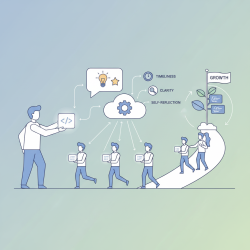
Once you've identified a promising candidate, the actual delegation process should be strategic and iterative. Avoid "throwing them in the deep end." Instead, adopt a gradual empowerment approach, starting with tasks that offer increased responsibility but come with manageable risk. This might mean delegating a specific component of a larger feature, then an entire feature, and eventually, leadership of a small project or initiative.
Crucially, provide clear expectations, context, and all necessary resources. Articulate not just the "what" but also the "why" behind the task. Ensure they know they have your support and that you are available for guidance, but resist the urge to micromanage. Trust is built through granting autonomy while maintaining an open line of communication.
Embrace and frame failures as learning opportunities. If a delegated task doesn't go perfectly, use it as a coaching moment rather than a reason to pull back responsibility. Discuss what went wrong, what could be done differently next time, and what support they might need. This fosters a growth mindset and builds confidence.
Regular, but not overly frequent, check-ins are vital. These allow you to monitor progress, offer course corrections, and address any blockers without removing their sense of ownership. The goal is to guide, not to control, enabling them to navigate challenges and celebrate successes independently.
Summary
Determining an engineer's readiness for increased delegation is a nuanced but essential aspect of effective software engineering management. It requires a keen eye for both technical excellence and crucial behavioral patterns, including proactive problem-solving, strong communication, and initiative. Managers should leverage one-on-one discussions, strategic stretch assignments, and diverse feedback mechanisms to assess readiness. The delegation itself should be a gradual process of empowerment, supported by clear expectations and a commitment to coaching, ultimately fostering growth, enhancing team productivity, and strengthening your engineering organization.
Comprehension questions
 What are some key technical indicators, beyond basic competence, that suggest an engineer is ready for more delegated tasks?How do an engineer's communication skills and initiative contribute to their readiness for increased responsibility?Describe at least two proactive strategies managers can use to assess an engineer's readiness for delegation.
Community Poll
Next Lesson

Course Contents : Mastering Delegation as an Engineering Manager
- >> 3.
 Assessing Employee Readiness for Task Delegation