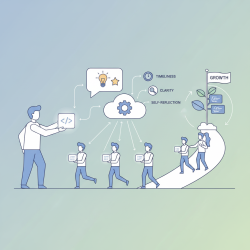
Synergy Between Delegation and Task Ownership
- -->> 4. Synergy Between Delegation and Task Ownership
What you'll learn
 Effective Delegation StrategiesCultivating Task OwnershipBuilding Trust and AutonomyAvoiding Micromanagement Pitfalls
In the dynamic and often complex world of software engineering, a manager's true strength lies not just in their individual technical prowess, but in their ability to cultivate a high-performing, self-sufficient team. Central to achieving this is the strategic practice of proper delegation and the fostering of genuine task ownership. Empowering your engineers to take charge of their work not only lightens a manager's load but ignites a sense of responsibility, innovation, and commitment that is vital for project success and team morale. This approach transforms a group of individual contributors into a cohesive, highly effective unit capable of tackling formidable challenges.
The Power of Empowerment
Empowerment in a software engineering context means giving engineers the authority, resources, and responsibility to make decisions and execute tasks with minimal direct oversight. It’s about trusting their expertise and judgment. When team members feel empowered, they move beyond simply executing instructions; they become active problem-solvers and innovators. This shift is crucial for agility and responsiveness in fast-paced development cycles.
An empowered team is more resilient to unforeseen obstacles. Instead of waiting for managerial directives, engineers who own their tasks are more likely to proactively identify issues, propose solutions, and collaborate to implement them. This fosters a culture of continuous improvement and reduces bottlenecks that often arise when all critical decisions flow through a single point of authority, typically the manager.
Key benefits of an empowered team include:
- Increased job satisfaction and morale, leading to higher retention rates.
- Faster decision-making and problem-solving at the source.
- Enhanced innovation as team members feel safe to experiment and propose new ideas.
- Development of leadership skills and growth opportunities for individual engineers.
The Art of Effective Delegation
Delegation is more than just offloading work; it's a strategic tool for developing your team and optimizing project delivery. Effective delegation requires clarity, trust, and support. Managers must clearly define the task, its objectives, success metrics, and any constraints, but resist the urge to dictate every step of the process. Providing the 'what' and 'why' rather than the 'how' is paramount.
When delegating, consider the individual strengths and growth areas of your team members. Assigning tasks that challenge engineers slightly beyond their current comfort zone, with appropriate support, is a powerful way to accelerate their professional development. This thoughtful assignment process not only ensures the task is handled competently but also builds confidence and expands skill sets within the team.
Crucial aspects of effective delegation:
- Clearly articulate the objective and expected outcome, not just the steps.
- Provide necessary context and access to resources.
- Grant the authority needed to make decisions related to the task.
- Establish check-in points without micromanaging the process.
- Offer support and be available for consultation, but allow autonomy.
Fostering Task Ownership
True ownership goes beyond simply completing a task; it involves a deep sense of responsibility for its success and impact. When engineers genuinely own a task or a feature, they invest more than just their time; they invest their intellectual and creative energy. They think critically about edge cases, user experience, maintainability, and future scalability, rather than just meeting the minimum requirements.
To foster ownership, managers should involve team members in the planning and definition phases of projects. When engineers contribute to shaping the problem statement and solution approach, they feel a stronger connection to the work. Celebrating successes and learning from failures collectively also reinforces ownership, as it demonstrates that their contributions, both good and bad, are recognized and valued.
Ownership thrives in an environment where mistakes are viewed as learning opportunities, not causes for blame. Providing psychological safety encourages engineers to take calculated risks and explore innovative solutions. This environment, coupled with clear accountability for outcomes, solidifies ownership and drives higher quality results.
The Pitfalls of Micromanagement and Lack of Delegation
Conversely, the absence of proper empowerment and delegation can severely cripple a software engineering team. Micromanagement is a common symptom of a lack of trust and often stems from a manager's fear of losing control or a belief that they are the only one capable of doing the job correctly. This approach suffocates initiative and breeds dependency.
When tasks are not properly delegated, managers become bottlenecks. They are overwhelmed with details, leading to delayed decisions, slower project progress, and increased stress for themselves. For the team, a lack of delegation means missed opportunities for growth, reduced morale, and a feeling of being undervalued. Engineers who are constantly told exactly what to do, without room for their own input, quickly become disengaged and less innovative.
The long-term consequences are dire: high turnover rates, a decline in code quality as engineers prioritize compliance over quality, and an overall stagnation of team capabilities. A team accustomed to having every step dictated will struggle to adapt to new challenges or take initiative when faced with ambiguity, becoming reactive rather than proactive.
Building a Culture of Trust and Autonomy
Establishing a culture where delegation and ownership are the norm requires intentional effort and consistent reinforcement from management. It begins with trust – trust in your engineers' abilities, their commitment, and their potential for growth. Managers must explicitly communicate this trust, not just through words, but through actions, by consistently delegating meaningful work and respecting the autonomy given.
Regular one-on-one meetings are excellent opportunities to discuss career development, understand individual aspirations, and identify suitable tasks for delegation. Providing constructive feedback, both positive and corrective, in a supportive manner, helps engineers grow and reinforces the understanding of their responsibilities. Celebrate successes publicly to acknowledge the team’s contributions and reinforce the value of their ownership.
By fostering an environment where engineers feel respected, trusted, and challenged, software engineering managers can unlock immense potential. This culture not only optimizes project delivery but also builds a highly motivated, skilled, and resilient team capable of navigating the complex demands of modern software development.
In summary, empowering a software engineering team through proper delegation and fostering genuine task ownership is not merely a management technique; it is a fundamental pillar of building a successful, innovative, and resilient development organization. We have explored how empowerment boosts morale, innovation, and problem-solving, and delved into the specifics of effective delegation and cultivating deep ownership. Conversely, the article highlighted the detrimental effects of micromanagement and a lack of trust, which can lead to disengagement and stagnation. Ultimately, by building a culture of trust and autonomy, managers can elevate their teams from merely executing tasks to actively driving success, fostering individual growth, and achieving superior project outcomes.
Comprehension questions
 What are the key benefits of an empowered software engineering team?According to the article, what is the crucial difference between merely offloading work and effective delegation?How can managers foster a sense of true task ownership among their engineers?What are some long-term consequences of micromanagement and a lack of proper delegation within a software engineering team?
Community Poll
Next Lesson

Course Contents : Mastering Delegation as an Engineering Manager
- >> 4.
 Synergy Between Delegation and Task Ownership