Overcoming Hurdles Preventing Proper Delegation
- -->> 5. Overcoming Hurdles Preventing Proper Delegation
What you'll learn
 Effective Delegation StrategiesBuilding Team TrustManagerial Mindset ShiftCommunication in Delegation
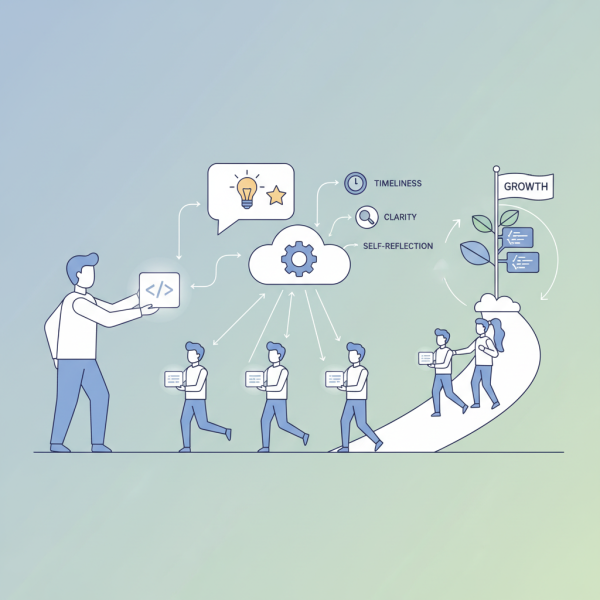
Delegation is more than just offloading tasks; it's a strategic tool for growth, efficiency, and team empowerment. For Software Engineering Managers, mastering delegation is paramount to scaling operations, fostering skill development, and maintaining focus on higher-level strategic initiatives. However, many managers, particularly in technical fields, encounter significant hurdles that prevent them from delegating effectively. This article will delve into these common obstacles and provide actionable strategies to overcome them, ultimately leading to a more productive, innovative, and engaged engineering team.
The "I Can Do It Faster Myself" Syndrome
This is perhaps the most prevalent hurdle encountered by software engineering managers. Managers, often former senior engineers, possess deep technical expertise and can frequently complete a task quicker than explaining it or waiting for a less experienced team member to finish it. While this might be true in the immediate short term for a single instance, this mindset is a severe bottleneck for long-term team growth, scalability, and manager bandwidth. It perpetuates a cycle where the manager becomes the single point of failure and growth within the team stagnates.
Overcoming It:
- Recognize Long-Term Value: Understand that the initial time investment in explaining a task and guiding a team member is an investment in future efficiency. Every delegated task that frees up your time allows you to focus on strategic planning, architectural oversight, or team development.
- Shift Your Focus: Your role has transitioned from individual contributor to an enabler and multiplier. Your value now comes from amplifying your team's output, not just your own.
- Document and Standardize: For recurring tasks, create documentation or templates. This reduces explanation time and ensures consistency, making future delegation much smoother.
- Embrace Initial Inefficiency: Accept that the first few times a task is delegated, it might take longer or require more oversight. This is a crucial part of the learning curve for your team and a necessary step towards greater autonomy.
Fear of Loss of Control and Quality Concerns
Entrusting critical tasks to others can feel like relinquishing control. Managers naturally worry about potential mistakes, delays, or a dip in quality that could reflect poorly on them, the project, or the entire team. This fear often leads to micromanagement, which can stifle creativity and demotivate team members, or worse, hoarding tasks, which leads to burnout for the manager and prevents the team from growing.
Overcoming It:
- Start Small and Build Trust: Begin by delegating low-risk tasks or components of larger tasks. As team members successfully complete these, your trust will grow, paving the way for more significant responsibilities.
- Define Clear Expectations and Success Metrics: Ambiguity is the enemy of effective delegation. Clearly articulate the desired outcome, quality standards, specific deadlines, and any constraints. Provide examples or reference points where applicable.
- Establish Appropriate Checkpoints: Implement regular, but not intrusive, check-ins. These are opportunities for support, course correction, and offering guidance, not for surveillance. Empower team members to come to you with blockers or questions proactively.
- Empowerment through Autonomy: While defining the 'what', give team members ownership over 'how' they achieve the desired outcome. This fosters creativity, problem-solving skills, and a greater sense of responsibility.
Lack of Trust in Team Capabilities
Sometimes, managers genuinely believe their team members lack the necessary skills or experience to handle certain responsibilities. This perception can be accurate in some instances, but often it's an underestimation of potential, or a failure to recognize that growth comes through challenge. Holding onto tasks due to perceived skill gaps creates a self-fulfilling prophecy, preventing the team from developing the very skills they need.
Overcoming It:
- Conduct a Skill Gap Analysis: Objectively identify specific skill gaps within your team. This moves beyond vague fears to concrete areas for development.
- Provide Targeted Training and Mentorship: Offer resources, pair programming opportunities, or assign a senior mentor to help build confidence and competence. Frame delegation as a learning opportunity.
- Utilize Stretch Assignments: Deliberately delegate tasks that are slightly beyond a team member's current comfort zone but still achievable with support. This is how engineers grow, pushing their boundaries in a safe environment.
- Offer Structured, Constructive Feedback: Provide specific, actionable feedback that helps team members understand areas for improvement without demotivating them. Focus on growth and learning rather than simply pointing out errors.
Poor Communication and Unclear Instructions
Delegation fails unequivocally when the delegatee doesn't fully understand what's expected of them. Ambiguity leads to rework, frustration, wasted effort, and a perception that delegation doesn't work effectively, eroding trust between manager and team.
Overcoming It:
- Be Exceptionally Specific: Clearly define the task, its purpose, the desired outcome, any constraints (e.g., budget, time, existing systems), resources available, and the deadline. Use the 'Who, What, When, Where, Why, How' framework to cover all bases.
- Confirm Understanding: Don't assume. Ask the team member to paraphrase the task, describe their initial approach, or outline potential challenges. This helps identify misunderstandings early on.
- Provide Context and Rationale: Explain why the task is important and how it fits into the larger project or company goals. This increases motivation, encourages better decision-making, and allows the team member to prioritize effectively.
- Document Key Information: For complex or recurring tasks, document the process, key decisions, or critical information in a shared knowledge base (e.g., Confluence, internal wiki). This serves as a reference and reduces repetitive explanations.
Wrap Up: The Path to Empowered Teams and Strategic Leadership
Effective delegation is not just a management technique; it is a cornerstone of building a high-performing, empowered software engineering team. By consciously addressing common hurdles such as the "I can do it faster myself" mindset, fears of quality compromise, and insufficient trust, managers can transform their approach to leadership. Strategies including starting small, setting clear expectations, providing targeted support, fostering open communication, and redefining one's managerial role are essential for success. Embracing delegation not only frees up a manager's time for strategic work but also fosters growth, autonomy, and job satisfaction within the team, ultimately driving greater collective productivity and innovation.
Comprehension questions
 What is the Name two strategies a manager can employ to address concerns about task quality and maintain control when delegating important responsibilities.How can a manager build trust in a team member's capabilities when there are perceived skill gaps, according to the article?Why is providing context and confirming understanding important during delegation, and what framework is suggested to ensure clarity in instructions?
Review Quiz
Next Lesson
Course Contents : Mastering Delegation as an Engineering Manager
- >> 5.
 Overcoming Hurdles Preventing Proper Delegation