Delivering Feedback for Delegated Tasks
- -->> 6. Delivering Feedback for Delegated Tasks
What you'll learn
 Constructive Feedback StrategiesEffective Delegation PrinciplesManagerial Communication SkillsTeam Empowerment through Feedback
Delegating tasks is a fundamental responsibility for any software engineering manager, crucial for scaling team productivity, fostering individual growth, and optimizing project delivery. However, the true value of delegation isn't fully realized without a robust feedback mechanism. Providing proper, constructive, and timely feedback on delegated tasks is an art that directly impacts team performance, morale, and the continuous development of your engineers. It transforms a simple task assignment into a powerful learning opportunity, ensuring that engineers not only complete their assignments but also grow in their capabilities and understanding.
The Foundation of Effective Delegation
Before diving into feedback, it's essential to briefly consider effective delegation itself. Delegation is more than just offloading work; it's about entrusting responsibility and authority. As a manager, your role evolves from doing the work to guiding others to do it successfully. This requires clarity at the outset, setting the stage for meaningful feedback later on. Without a solid foundation, feedback can feel arbitrary or misdirected.
Setting Clear Expectations Upfront
The cornerstone of effective feedback begins even before the task is started: by clearly defining expectations. When delegating, ensure the engineer fully understands:
- The "What": What is the specific task or objective?
- The "Why": What is the purpose or impact of this task on the larger project or business goal?
- The "How" (to a degree): What are the suggested approaches, constraints, or best practices? How will success be measured?
- The "When": What are the deadlines and critical milestones?
- The "Who": Who are the stakeholders, and who can they consult for help?
Ambiguity here leads to misunderstandings, which then manifest as "failures" that are hard to give objective feedback on. A quick check-in to confirm understanding after delegation can prevent many issues down the line.
Timeliness is Key
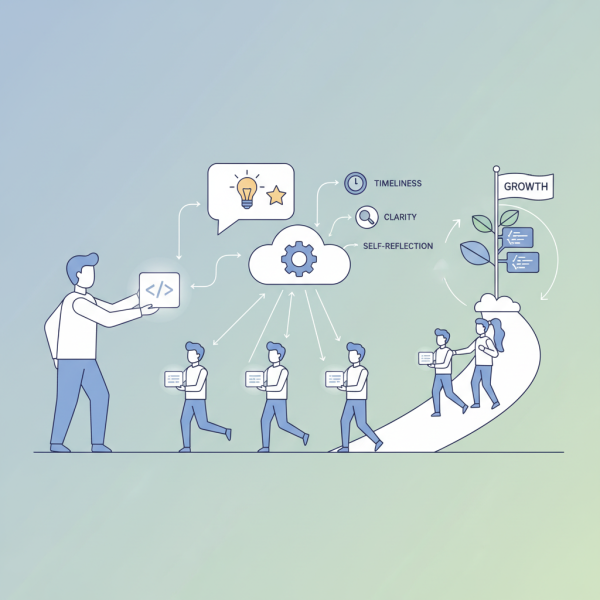
Delaying feedback significantly diminishes its impact. The longer you wait, the harder it becomes for the engineer to recall the specifics of their actions and the context surrounding them. Timely feedback, ideally delivered as close to the event or completion of a milestone as possible, allows for immediate course correction and reinforces learning while the experience is still fresh.
Consider two types of timeliness: immediate feedback for minor issues or quick wins, and structured feedback for larger deliverables or post-mortems. Both are valuable but serve different purposes. Don't wait for a formal performance review to address significant patterns or issues; do it when it matters most.
Focus on the Work, Not the Person
When delivering feedback, always direct your comments towards the work product, processes, or observable behaviors, rather than making assumptions about the individual's intentions, personality, or intelligence. This objective approach makes the feedback easier to receive and more actionable. For instance, instead of saying "You are careless," say "The error handling in this module could be more robust, leading to potential issues in production."
This distinction is vital for maintaining a positive relationship and fostering a growth mindset. Engineers are often highly invested in their work, and personalizing criticism can be demotivating and counterproductive.
The STAR Method for Structured Feedback
A highly effective framework for delivering structured, behavioral feedback is the STAR method. It helps you articulate observations clearly and objectively:
- Situation: Describe the specific context or situation when the behavior occurred. "During the sprint review for the authentication service..."
- Task: Explain the task or objective the individual was meant to accomplish. "...the task was to demonstrate the new multi-factor authentication flow."
- Action: Detail the specific actions the engineer took. "...you presented a demo where the MFA flow failed repeatedly due to an unhandled edge case."
- Result: Explain the outcome or impact of their actions. "...this led to a loss of confidence from stakeholders and required additional time to explain and reschedule the demo."
Following this, you can then offer specific advice on how to improve or what to do differently next time. The STAR method provides a clear, defensible, and actionable path for improvement.
Delivering Constructive Criticism
Constructive criticism isn't about tearing down; it's about building up. When addressing areas for improvement, focus on the 'how' and 'what next' rather than just pointing out flaws. Avoid the "feedback sandwich" (positive-negative-positive) if it feels inauthentic, as it can often obscure the main message. Instead, strive for honest, direct, and empathetic communication.
Provide specific examples. General statements like "your code needs to be better" are unhelpful. Instead, offer concrete suggestions: "Consider adding unit tests to this utility class to improve its reliability," or "Let's explore using a design pattern here to make the component more maintainable." Always frame feedback with an eye towards future growth and better outcomes.
Encouraging Self-Reflection and Dialogue
Effective feedback is a two-way street. Instead of simply dictating improvements, encourage the engineer to reflect on their own performance. Ask open-ended questions like: "What do you think went well in completing this task?" or "If you were to do this again, what might you do differently?" This approach fosters critical thinking, ownership, and a deeper understanding of the learning points.
Listening actively to their perspective is equally important. There might be context or challenges you weren't aware of. A collaborative discussion helps engineers feel valued and empowers them to actively participate in their own development plan, rather than passively receiving instructions.
Follow-Up and Continuous Improvement
Feedback is not a one-time event; it's part of an ongoing cycle of development. After delivering feedback and agreeing on a path forward, it's crucial to follow up. This shows commitment to their growth and provides an opportunity to observe whether the feedback was understood and applied effectively. Schedule a check-in to discuss progress, review changes, and acknowledge improvements.
This continuous loop reinforces positive behaviors and allows for adjustments to the feedback strategy if needed. It demonstrates that you are invested in their success, building trust and strengthening the manager-report relationship.
Summary
Providing effective feedback on delegated tasks is a critical skill for software engineering managers, pivotal for both individual engineer development and overall team success. It begins with clear expectation setting during delegation, followed by timely, objective, and behavior-focused communication. Utilizing frameworks like the STAR method can structure critical conversations, while fostering self-reflection and a two-way dialogue ensures the feedback is truly impactful. Finally, remember that feedback is a continuous process, requiring follow-up to reinforce learning and demonstrate commitment to growth. By mastering these principles, managers can transform delegated tasks into powerful engines for talent development and project excellence.
Comprehension questions
 Why is setting clear expectations upfront considered the cornerstone of effective feedback for delegated tasks?What is the STAR method, and how does it help in delivering structured feedback?Why is it important to focus feedback on the work or observable behaviors rather than the person?How does encouraging self-reflection and dialogue enhance the feedback process?
Review Quiz
Next Lesson
Course Contents : Mastering Delegation as an Engineering Manager
- >> 6.
 Delivering Feedback for Delegated Tasks