Non-Verbal Communication and Body Language
- -->> 6. Non-Verbal Communication and Body Language
What you'll learn
 The Silent Language of Body PostureThe Power of Eye ContactGestures: Emphasizing Your WordsMovement and Proxemics: Space and Dynamics
Non-verbal communication is a profound and often subconscious language that underpins nearly every human interaction. Far beyond the words we speak, our body language, eye contact, gestures, and overall movement convey a wealth of information, shaping perceptions, building rapport, and amplifying or undermining our verbal messages. Mastering this silent dialogue is not just about appearing confident; it is about genuinely connecting with others, establishing trust, and ensuring that your intended message is received with clarity and impact. Understanding these subtle cues allows us to become more effective communicators and more perceptive observers in all aspects of life, from professional settings to personal relationships.
The Silent Language of Body Posture
Your posture is one of the most immediate indicators of your state of mind and attitude. An upright, open posture signals confidence, engagement, and readiness. It suggests that you are present, attentive, and open to communication. Conversely, slouching can inadvertently convey disinterest, insecurity, or even disrespect.
Consider the power of an open posture, where your arms are uncrossed and your body is generally facing the person you are interacting with. This communicates receptiveness and a willingness to engage. A closed posture, such as crossed arms or legs, can create a barrier, suggesting defensiveness, disagreement, or a lack of openness, even if that is not your intention. Consciously adjusting your posture can immediately alter how you are perceived and how you feel.
The Power of Eye Contact
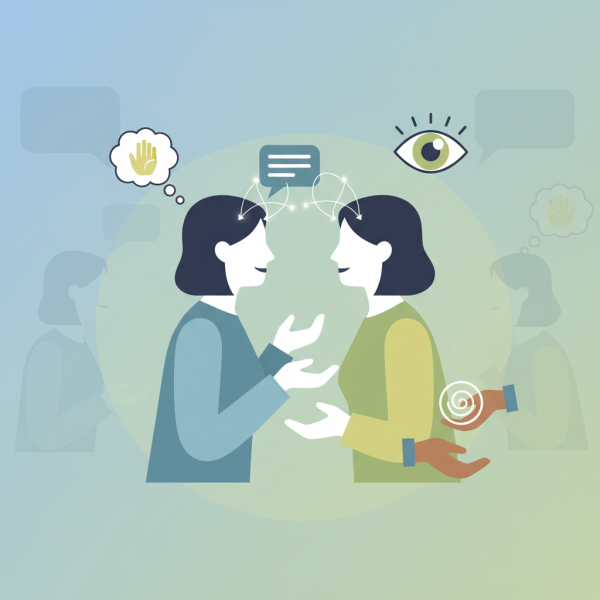
Eye contact is a cornerstone of effective non-verbal communication, serving as a powerful tool for establishing connection, conveying sincerity, and demonstrating active listening. Appropriate eye contact builds trust and shows respect. Too little eye contact can be interpreted as shyness, deception, or disinterest, making it difficult for others to feel connected to you.
On the other hand, overly intense or prolonged eye contact can be perceived as aggressive, intimidating, or uncomfortable. The key lies in achieving a balanced approach: engage in regular eye contact to show you are paying attention, but also allow for natural breaks to avoid staring. This can involve scanning the room or briefly looking away before re-establishing contact. Be mindful of cultural differences, as norms for eye contact vary widely across different societies.
Gestures: Emphasizing Your Words
Gestures are dynamic movements of the hands, arms, and body that add emphasis, clarity, and emotion to our spoken words. Used effectively, gestures can illustrate complex ideas, underscore important points, and make your communication more engaging. Natural, fluid gestures indicate enthusiasm and conviction.
However, uncontrolled or excessive gesturing can be distracting and undermine your message. Fidgeting with hands or objects often signals nervousness or discomfort, diverting attention from what you are saying. Understanding the impact of different gestures is crucial:
- Illustrative gestures: These describe or paint a picture of what you are saying, such as indicating size or direction.
- Emphatic gestures: These are used to highlight key points and add weight to your words, like a firm chop of the hand.
- Regulatory gestures: These help control the flow of conversation, such as raising a hand to signal you wish to speak.
Open-handed gestures generally convey honesty and openness, while pointing can sometimes be perceived as aggressive or accusatory, depending on the context and culture.
Movement and Proxemics: Space and Dynamics
The way you move and your use of physical space, known as proxemics, also contribute significantly to your non-verbal message and overall presence. Purposeful and confident movement suggests energy and control, whereas restless or hesitant movements can project uncertainty. Standing still when appropriate, or moving deliberately, communicates composure.
Proxemics involves understanding the different zones of personal space and how invading or respecting them impacts interactions. We maintain different distances for intimate, personal, social, and public interactions. Moving too close to someone can make them uncomfortable, while keeping too much distance might signal aloofness. Becoming aware of these invisible boundaries allows you to adjust your positioning to foster comfort and connection. Subtle mirroring of another person's body language, if done naturally, can also build rapport and trust without words.
Integrating Non-Verbal Cues for Enhanced Presence
The true power of non-verbal communication emerges when your verbal and non-verbal messages are congruent. When your body language aligns with your words, your message becomes more believable and impactful. Inconsistency, such as saying you are excited with a flat tone and slouched posture, creates confusion and undermines credibility.
To enhance your message and presence, cultivate self-awareness of your own non-verbal habits. Practice active listening not just with your ears, but with your entire body, showing interest through your posture and eye contact. Adapt your non-verbal cues to the specific context and audience; what works in a casual setting may not be appropriate in a formal one. Regularly integrating these practices will lead to a more powerful and authentic presence.
- Observe others: Pay attention to effective non-verbal communicators.
- Practice deliberately: Consciously work on your posture, eye contact, and gestures.
- Seek feedback: Ask trusted friends or colleagues for their observations.
- Record yourself: Reviewing video of yourself can reveal unconscious habits.
Summary
Leveraging non-verbal communication is essential for effective human interaction, allowing us to enhance our messages and strengthen our presence. This article explored the critical roles of body posture in conveying confidence and openness, the significance of eye contact in building connection and sincerity, the impact of gestures in emphasizing verbal communication, and the dynamics of movement and personal space in shaping perceptions. By understanding and consciously practicing these elements, individuals can achieve greater clarity, build stronger rapport, and exert a more influential and authentic presence in all their communications.
Comprehension questions
 What are the key elements of non-verbal communication discussed in the article?How does body posture influence perception, and what is the difference between an "open" and "closed" posture?What are the challenges and benefits of maintaining appropriate eye contact, and how can one achieve balance?Explain the concept of proxemics and its role in conveying non-verbal messages.
Review Quiz
Next Lesson
Course Contents : Public Speaking for Engineering Managers
- >> 6.
 Non-Verbal Communication and Body Language