Strategies for High-Impact Team Meetings
- -->> 7. Strategies for High-Impact Team Meetings
What you'll learn
 Effective Stand-upsProductive RetrospectivesConstructive Design ReviewsMeaningful One-on-Ones
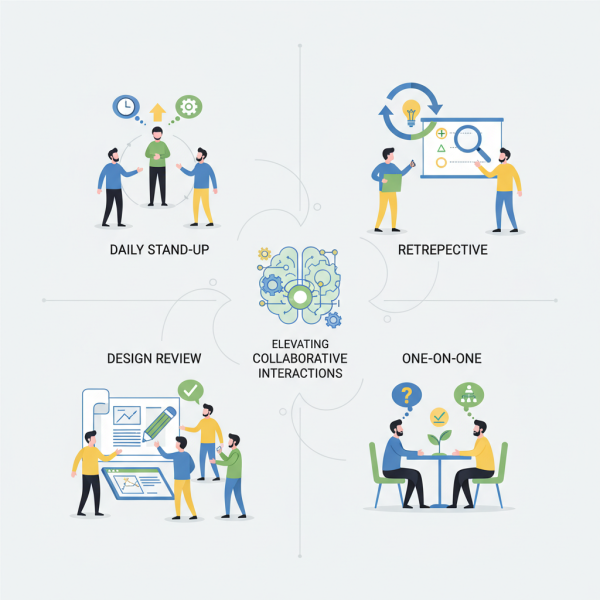
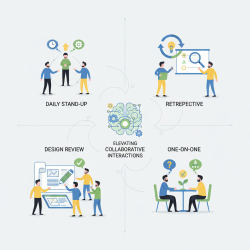
Elevating Collaborative Interactions
Effective communication and collaboration are the bedrock of successful teams and projects. While spontaneous discussions are valuable, structured meetings serve crucial purposes, from daily alignment to strategic planning. This article delves into strategies for optimizing four distinct types of special meetings: daily stand-ups, retrospectives, design reviews, and one-on-ones. Mastering these formats can significantly enhance productivity, foster transparency, and drive continuous improvement within any organization. By understanding the unique objectives and best practices for each, teams can transform potential time sinks into powerful catalysts for progress and innovation.
Daily Stand-ups: The Pulse of Productivity
Daily stand-ups, often associated with Agile methodologies, are short, focused meetings designed to synchronize team members and identify obstacles. Their primary goal is not to solve problems in real-time but to raise awareness of progress, plans, and impediments. Typically lasting no more than 15 minutes, these meetings encourage brevity and clarity. Each team member answers three key questions: What did I accomplish yesterday? What will I work on today? Are there any impediments blocking my progress?
For stand-ups to be effective, consistency is paramount. Holding them at the same time and place each day helps establish a routine. The 'standing' aspect encourages brevity and discourages lengthy discussions, which should be moved to a separate follow-up meeting involving only relevant parties. A facilitator can help keep the team on track and ensure everyone has an opportunity to speak. It is crucial to focus on current work and immediate future plans, avoiding delving into past details or hypothetical scenarios.
- Strategies for Effective Stand-ups:
- Timebox Strictly: Adhere to the 15-minute limit without exception.
- Focus on the Three Questions: Keep contributions concise and relevant to yesterday's achievements, today's plans, and blockers.
- Identify Blockers, Don't Solve Them: Note impediments and schedule separate meetings for resolution.
- Stand Up: The physical act helps maintain focus and brevity.
- Encourage Peer Support: Team members should feel comfortable asking for help or offering it.
- No Micro-Management: The meeting is for team synchronization, not individual reporting to a manager.
Retrospectives: Learning from the Past, Shaping the Future
Retrospectives are critical recurring meetings where teams reflect on their recent work, identify what went well, what could be improved, and commit to actionable changes. Often conducted at the end of an iteration or project phase, these meetings are rooted in the principle of continuous improvement. Their effectiveness hinges on creating a safe, blame-free environment where honesty and open communication are encouraged.
A typical retrospective follows a structured approach to maximize insights. It begins with 'setting the stage' to define the meeting's purpose and ensure psychological safety. Next, 'gather data' involves recalling events and facts from the period under review. 'Generate insights' is where the team analyzes the gathered data to understand patterns and root causes. Finally, 'decide what to do' focuses on formulating concrete, actionable improvements, often resulting in one or two specific action items with owners and deadlines. The meeting concludes with a 'closing' to appreciate participation and review next steps.
- Key Strategies for Retrospectives:
- Psychological Safety First: Establish ground rules that promote respect and a non-judgmental atmosphere.
- Vary Activities: Use different formats and exercises (e.g., 'Start, Stop, Continue,' 'Mad, Sad, Glad') to keep engagement high.
- Focus on Actions: Ensure outputs are concrete, measurable action items, not just observations.
- Facilitate Effectively: A skilled facilitator can guide discussions, manage time, and ensure all voices are heard.
- Follow Up: Review progress on action items from previous retrospectives at the start of the next.
Design Reviews: Sharpening Ideas Through Peer Scrutiny
Design reviews are structured sessions where a design, whether it's software architecture, user interface, or a product concept, is presented to a group of peers, stakeholders, and experts for feedback and critique. The goal is to identify flaws, anticipate potential issues, and improve the overall quality and feasibility of the design before significant development effort is invested. These reviews are not about criticism for its own sake, but constructive feedback aimed at refinement.
Effective design reviews require thorough preparation from the presenter. This includes clearly articulating the design's objectives, constraints, target audience, and key decisions made. Providing documentation, prototypes, or visual aids in advance allows reviewers to come prepared with informed questions and suggestions. During the review, the presenter should guide the discussion, clarifying points and documenting feedback. Reviewers should focus on providing specific, actionable, and objective feedback, avoiding personal opinions or vague comments.
- Strategies for Impactful Design Reviews:
- Define Objectives: Clearly state what aspect of the design is being reviewed and what kind of feedback is sought.
- Pre-Circulate Materials: Provide context and design specifications beforehand to save meeting time.
- Diverse Reviewers: Include team members, domain experts, potential users, and even non-technical stakeholders for varied perspectives.
- Structured Feedback: Use a template or framework for feedback to ensure consistency and focus (e.g., 'What works,' 'What needs improvement,' 'Questions').
- Focus on the Design, Not the Designer: Maintain a professional and objective tone.
- Document Outcomes: Record feedback, decisions, and action items for accountability.
One-on-Ones: Cultivating Individual Growth and Connection
One-on-one meetings are dedicated, private discussions between two individuals, most commonly a manager and their direct report, but also valuable in mentor-mentee relationships. Unlike team meetings, one-on-ones are primarily focused on the individual's development, well-being, and career trajectory. They are invaluable for building trust, providing tailored feedback, addressing concerns, and aligning individual goals with broader organizational objectives. These meetings should be regular, often weekly or bi-weekly, and consistently scheduled.
The most effective one-on-ones are typically driven by the direct report's agenda. This empowers the individual to bring up topics most pertinent to them, whether it's current project challenges, skill development, career aspirations, or workload management. The manager's role is to listen actively, ask probing questions, offer guidance, and provide constructive feedback. It's a prime opportunity to discuss professional growth, offer mentorship, and understand any underlying issues affecting performance or engagement. Avoid letting one-on-ones turn into mere status updates; those can be handled elsewhere.
- Strategies for Meaningful One-on-Ones:
- Report-Driven Agenda: Empower the individual to set the topics they wish to discuss.
- Consistent Scheduling: Regularity builds trust and ensures continuity.
- Active Listening: Give undivided attention, ask open-ended questions, and seek to understand.
- Focus on Development: Discuss career goals, learning opportunities, and growth paths.
- Offer Balanced Feedback: Provide both recognition for achievements and constructive suggestions for improvement.
- Create Psychological Safety: Ensure the individual feels safe to share concerns and challenges openly.
- Document Key Takeaways: Note action items and follow-ups, without turning it into a formal performance review.
Summary: Orchestrating Meeting Excellence
Mastering special meeting types transforms them from mere calendar entries into potent tools for team efficiency, learning, and growth. Daily stand-ups foster quick alignment and obstacle identification. Retrospectives drive continuous improvement by enabling teams to learn from their experiences. Design reviews ensure robust solutions through collaborative critique. One-on-ones cultivate individual potential and strengthen professional relationships. By implementing the strategies outlined for each, organizations can elevate their collaborative practices, ensuring every scheduled interaction is a valuable investment in collective success and individual development. The common thread across all these effective meeting types is a clear purpose, structured approach, and a commitment to active participation and actionable outcomes.
Comprehension questions
 What are the three key questions answered by each team member during a daily stand-up, and why is it important not to solve problems during this meeting?Describe the structured approach typically followed in a retrospective meeting, from setting the stage to deciding what to do.What kind of preparation is essential for a presenter before a design review, and what should reviewers focus on when providing feedback?Why are the most effective one-on-ones typically driven by the direct report's agenda, and what is the manager's primary role during these discussions?
Review Quiz
Next Lesson
Course Contents : Running Effective Meetings for Software Engineering Managers
- >> 7.
 Strategies for High-Impact Team Meetings