Mastering Decision-Making and Action Planning
- -->> 4. Mastering Decision-Making and Action Planning
What you'll learn
 Structured Decision ProcessEffective Action PlanningResponsibility & AccountabilityAdaptability & Learning
Mastering the Art of Execution
The ability to make clear, informed decisions and translate them into effective action plans is paramount for both individual and organizational success. It's not enough to simply identify a path forward; true mastery lies in the structured approach to decision-making, meticulous planning, precise assignment of responsibilities, and unwavering commitment to accountability. This article will delve into the essential techniques and frameworks that empower you to navigate complex choices, streamline implementation, and ensure that intentions consistently evolve into tangible results.
The Foundation of Clear Decisions
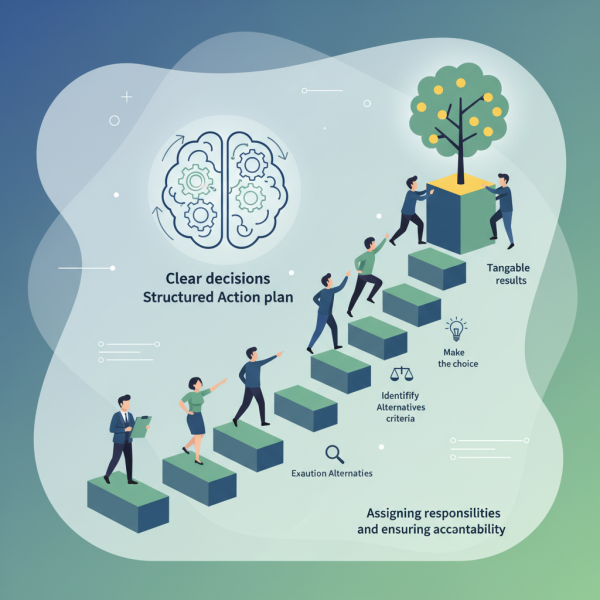
Effective decision-making begins long before a choice is made. It requires a systematic approach to understanding the situation at hand, gathering relevant data, and exploring various potential solutions. Rushing this initial phase often leads to flawed decisions and subsequent planning difficulties.
First, clearly define the problem or opportunity. What exactly needs to be decided? What is the desired outcome? Ambiguity here can derail the entire process. Once the core issue is clear, gather all pertinent information. This might involve research, data analysis, consulting experts, or soliciting feedback from stakeholders. The quality of your decision is directly linked to the quality of your information.
Next, identify a range of alternatives. Avoid settling for the first viable option. Brainstorming and creative thinking can uncover innovative solutions that might not be immediately obvious. For each alternative, consider its potential benefits, drawbacks, risks, and resource requirements. This comprehensive evaluation is crucial for making an informed choice.
To aid in this evaluation, establish clear decision criteria. These are the standards against which each alternative will be measured. Criteria could include cost-effectiveness, feasibility, impact on stakeholders, strategic alignment, or speed of implementation. Prioritizing these criteria helps in weighing the options objectively.
Making the Decision with Confidence
With a solid foundation laid, the moment arrives to make the choice. This phase often involves balancing analytical rigor with practical considerations and, sometimes, informed intuition. The goal is to move forward decisively without succumbing to 'analysis paralysis,' where excessive deliberation prevents any action.
Consider the nature of the decision. Is it a critical, long-term strategic choice requiring extensive analysis and consensus, or a more tactical decision that needs a quicker resolution? For significant decisions, frameworks like a decision matrix can be invaluable, allowing you to score alternatives against weighted criteria. For smaller, routine choices, a more streamlined process might suffice.
Risk assessment is an integral part of this stage. Understand the potential downsides of each chosen path and develop strategies to mitigate those risks. Being aware of what could go wrong allows for proactive planning and a more resilient action strategy. Ultimately, trust the process you've established and commit to the chosen course.
Crafting an Effective Action Plan
A brilliant decision is useless without a well-structured action plan to bring it to life. This is where the abstract concept transforms into concrete steps. The key is to break down the overall decision into manageable, sequential tasks.
For each task, apply the SMART goal principle:
- Specific: Clearly define what needs to be done.
- Measurable: Establish criteria for tracking progress and success.
- Achievable: Ensure the task is realistic and can be accomplished.
- Relevant: Confirm the task aligns with the overall objective.
- Time-bound: Set clear deadlines for completion.
Establish a logical sequence for these tasks, identifying any dependencies. Some tasks must be completed before others can begin. Assign realistic timelines for each step, considering available resources and potential bottlenecks. Resource allocation is critical; ensure that the necessary personnel, budget, tools, and information are available for each part of the plan.
Assigning Responsibilities and Ensuring Accountability
The best plans fail without clear ownership. This section focuses on translating the action plan into actionable assignments and fostering a culture of accountability. Clear roles and responsibilities are non-negotiable.
Each task within the action plan must have a designated owner. This individual is responsible for its completion. This is not merely about delegating work; it’s about assigning ownership and empowering individuals to drive their assigned parts of the project. Clearly communicate expectations, deadlines, and the resources available to them.
To ensure accountability, implement a robust system for tracking progress. This could involve regular check-in meetings, status reports, or project management software. Regular communication channels should be established to allow for updates, problem-solving, and clarification. When issues arise, they should be addressed promptly and constructively.
Accountability also extends to feedback and recognition. Acknowledge and reward progress and successful task completion. Conversely, when tasks fall behind or are not completed to standard, address these issues directly and provide support or corrective action as needed. This fosters a sense of responsibility and commitment across the team.
- Clearly define who is responsible for each specific task.
- Establish consistent communication protocols for updates and issues.
- Implement a tracking system to monitor progress against deadlines.
- Provide constructive feedback and support when challenges arise.
- Celebrate successes to reinforce positive behavior and motivation.
Overcoming Obstacles and Adapting
No plan unfolds exactly as anticipated. Challenges will inevitably arise, and the ability to anticipate, adapt, and learn from these experiences is a hallmark of effective action planning. Proactive contingency planning is vital. As part of your initial decision-making and planning, consider potential roadblocks and develop alternative strategies or backup plans.
Maintain flexibility. While a detailed plan is essential, rigidity can be detrimental. Be prepared to adjust timelines, reallocate resources, or even modify aspects of the plan if new information emerges or circumstances change. Regular reviews of the plan's progress and effectiveness allow for timely adjustments.
Finally, cultivate a learning mindset. Each decision and action plan provides valuable insights, regardless of the outcome. Analyze what worked well and what didn't. Document lessons learned to refine future decision-making processes and enhance action planning capabilities. This iterative improvement is key to continuous mastery.
Summary
Mastering decision-making and action planning is a continuous journey that blends strategic thinking with meticulous execution. By systematically defining problems, thoroughly evaluating options, crafting SMART action plans, clearly assigning responsibilities, and fostering a culture of accountability, individuals and teams can confidently navigate complexities. Furthermore, embracing adaptability and continuous learning ensures that plans remain agile and responsive to changing conditions, ultimately translating intentions into consistent, measurable accomplishments.
Comprehension questions
 What are the initial crucial steps in the decision-making process before any choice is made?How does the SMART goal principle apply to crafting an effective action plan, and what does each letter stand for?What are the key elements for assigning responsibilities and ensuring accountability within an action plan?Why is adaptability important in action planning, and how does it contribute to overcoming obstacles?
Community Poll
Next Lesson

Course Contents : Running Effective Meetings for Software Engineering Managers
- >> 4.
 Mastering Decision-Making and Action Planning