Coaching by Active Listening and Powerful Questioning
- -->> 2. Coaching by Active Listening and Powerful Questioning
What you'll learn
 Empathetic ListeningEmpowering QuestionsSelf-DiscoverySolution-Oriented Coaching
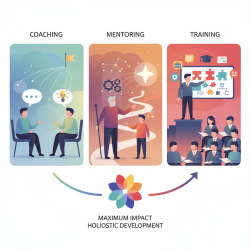
To truly unlock the potential of their teams, managers must evolve from directors to coaches, fostering an environment of autonomy, growth, and self-discovery. This transformative shift hinges significantly on developing two crucial skills: active listening and powerful questioning. By mastering these techniques, managers can empower engineers to find their own solutions, develop their insights, and take greater ownership of their work, leading to more resilient, innovative, and engaged teams.
The Shift from Manager to Coach
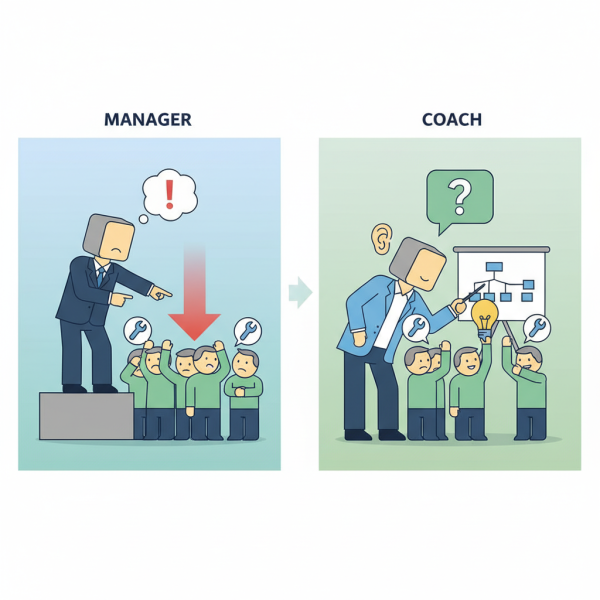
The role of a manager traditionally involves assigning tasks, monitoring progress, and providing directives. While these functions remain important, a coaching approach elevates the manager's impact beyond mere oversight. A manager as a coach acts as a facilitator, a guide who helps individuals navigate challenges, identify their strengths, and chart their own professional development path. This approach recognizes that the best solutions often come from the individuals closest to the problem, and that true growth happens when people are empowered to think critically and solve issues independently rather than simply following instructions.
This transition requires a fundamental change in mindset. Instead of feeling responsible for having all the answers, a coaching manager embraces the idea of facilitating the discovery of answers within their team. This not only builds capacity within the team but also frees up the manager to focus on more strategic initiatives. It's about building capability, not just delivering outcomes.
The Power of Active Listening
Active listening is far more than just hearing words; it's about fully understanding the speaker's message, both explicit and implicit. It involves giving your full attention, suspending judgment, and demonstrating empathy. For a manager-coach, active listening is the bedrock upon which trust is built and insights are uncovered. When engineers feel truly heard, they are more likely to open up about challenges, concerns, and nascent ideas, creating a richer dialogue.
Key techniques for practicing active listening include:
- Maintain Eye Contact: Show you are engaged and focused on the speaker.
- Minimize Distractions: Put away devices, close unnecessary tabs, and create a conducive environment.
- Reflect and Paraphrase: Reiterate what you've heard in your own words to confirm understanding and show you've absorbed the message. For example, "So, what I hear you saying is..."
- Empathize: Acknowledge the speaker's emotions and perspective, even if you don't fully agree with their interpretation of events. Phrases like "That sounds frustrating" or "I can see why you'd feel that way" can be powerful.
- Resist Interruption: Allow the engineer to complete their thoughts without cutting them off, even if you anticipate their conclusion.
- Observe Non-Verbal Cues: Pay attention to body language, tone of voice, and facial expressions, as these often convey as much meaning as the words themselves.
By genuinely listening, managers gain a deeper understanding of the engineer's perspective, the root causes of issues, and the underlying motivations. This deep understanding is crucial for crafting truly impactful coaching interventions.
Crafting Powerful Questions
Once active listening has provided a clear picture, the next step in coaching is to use powerful questions. Unlike directive questions that seek a specific answer or lead the individual, powerful questions are open-ended, thought-provoking, and designed to encourage self-reflection, critical thinking, and exploration of possibilities. They shift the responsibility for finding solutions from the manager to the engineer, fostering greater ownership and learning.
Characteristics of powerful questions:
- Open-Ended: They cannot be answered with a simple "yes" or "no." They begin with "What," "How," "When," "Where," or "Who."
- Future-Oriented: They often focus on possibilities, next steps, and desired outcomes rather than dwelling solely on past problems. For example, "What would success look like for you in this situation?"
- Solution-Focused: They guide the engineer towards identifying potential solutions or strategies. "What options have you considered so far?" or "What's one small step you could take to move forward?"
- Challenge Assumptions: They can gently push an engineer to reconsider their perspectives. "What might be another way to look at this?"
- Evoke Self-Discovery: They encourage the engineer to tap into their own knowledge and experience. "What have you learned from similar situations in the past?"
- Simple and Direct: Avoid jargon or overly complex phrasing that might confuse or overwhelm.
Powerful questions avoid advice-giving and instead facilitate the engineer's own journey of discovery. They create space for new insights to emerge and reinforce the engineer's capability to solve problems.
Fostering Empowerment and Ownership
The ultimate goal of adopting a coaching approach, underpinned by active listening and powerful questioning, is to empower engineers and instill a sense of ownership over their work and development. When engineers are encouraged to articulate their challenges, explore solutions, and commit to their own action plans, they become more engaged, accountable, and resilient. This empowerment translates into higher job satisfaction, improved problem-solving skills, and a stronger sense of purpose within the team.
By consistently coaching, managers cultivate a culture where experimentation is encouraged, learning from mistakes is embraced, and continuous improvement is a shared responsibility. Engineers learn to trust their judgment, seek out resources independently, and collaborate more effectively, knowing their manager is a supportive ally rather than merely a taskmaster.
Summary
Transforming the manager's role into that of a coach is a strategic imperative for modern engineering leadership. This article emphasized the critical development of active listening and powerful questioning skills. Active listening builds trust and deep understanding by engaging fully with the speaker, while powerful questions stimulate self-reflection and enable engineers to discover their own solutions. Together, these competencies foster empowerment, ownership, and continuous growth within engineering teams, leading to greater innovation and individual development. By embracing this coaching paradigm, managers can truly unlock the full potential of their talented engineers.
Comprehension questions
 What is the primary difference between a traditional manager and a manager adopting a coaching approach?Name two specific techniques for practicing active listening mentioned in the article.How do powerful questions differ from directive questions, and what is their main purpose?What are some of the key benefits for engineers and teams when managers foster empowerment and ownership through coaching?
Community Poll
Next Lesson

Course Contents : Coaching, Mentoring, and Training for Software Engineering Managers
- >> 2.
 Coaching by Active Listening and Powerful Questioning