Core Differences Between Coaching, Mentoring, and Training
- -->> 1. Core Differences Between Coaching, Mentoring, and Training
What you'll learn
 CoachingMentoringTrainingProfessional Development Strategies
In the landscape of personal and professional development, terms like coaching, mentoring, and training are frequently used, often interchangeably. However, despite their shared goal of enhancing an individual's capabilities and performance, each strategy possesses distinct definitions, objectives, and appropriate applications. Misunderstanding these core differences can lead to ineffective development programs and suboptimal outcomes. This article aims to demystify these powerful people development approaches, providing clarity on when and how to best leverage each for maximum impact.
Understanding Coaching: Facilitating Self-Discovery and Performance
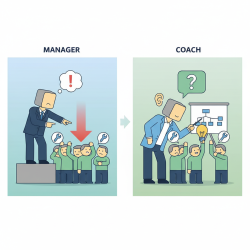
Coaching is a powerful development process that focuses on unlocking an individual's potential to maximize their own performance. It's about helping people learn rather than teaching them. A coach acts as a facilitator, guiding the coachee through a structured conversation process that encourages self-reflection, goal setting, and problem-solving. The relationship is typically client-led, meaning the coachee determines the agenda, and the coach uses questioning techniques to help them discover their own solutions and insights.
The primary objective of coaching is often linked to specific performance improvements, skill enhancement, or achieving particular goals. It is largely future-focused, dealing with current challenges and opportunities to move forward. Coaching relationships are generally short to medium-term, concentrating on specific outcomes within a defined timeframe. The coach's role is non-directive, fostering autonomy and self-reliance in the coachee.
- Focus: Unlocking potential, self-discovery, performance improvement, goal attainment.
- Relationship: Client-led, non-directive, equality between coach and coachee.
- Objective: Enhanced performance, problem-solving, achieving specific personal or professional goals.
- Duration: Typically short to medium-term, task-specific.
Understanding Mentoring: Guiding with Experience and Wisdom
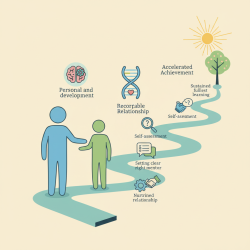
Mentoring involves a more experienced individual (the mentor) providing guidance, advice, and support to a less experienced individual (the mentee). The relationship is characterized by the mentor sharing their wisdom, knowledge, and insights gained from their own professional journey. Unlike coaching, mentoring is often mentor-led in terms of offering advice and sharing experiences, though the mentee still drives their overall developmental needs.
The objectives of mentoring are broader and more holistic, often encompassing career development, personal growth, navigating organizational culture, and building professional networks. It's about transferring tacit knowledge and fostering a mentee's overall growth within their field or organization. Mentoring relationships are typically long-term and informal, developing organically over time, providing ongoing support and a sounding board for the mentee.
- Focus: Career development, personal growth, wisdom sharing, long-term support.
- Relationship: Mentor-led (experienced individual sharing), supportive, often informal.
- Objective: Broad career guidance, knowledge transfer, navigating organizational complexities, holistic development.
- Duration: Typically long-term, ongoing, relationship-driven.
Understanding Training: Structured Skill and Knowledge Acquisition
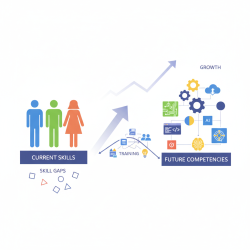
Training is a structured and often formal process designed to impart specific skills, knowledge, or competencies to individuals. It is typically instructor-led and highly directive, with clear learning objectives and a defined curriculum. The focus is on bridging specific skill gaps or introducing new information that is directly applicable to a job role or task. Training environments can range from workshops and seminars to online courses and certifications.
The primary objective of training is to ensure participants acquire a predefined set of skills or knowledge, enabling them to perform particular tasks or roles more effectively. It addresses current deficiencies or prepares individuals for new responsibilities. Training is typically short-term and event-based, with success measured by the participants' ability to demonstrate the learned competencies. It is about "teaching" individuals how to do something or understand specific information.
- Focus: Skill acquisition, knowledge transfer, competency development, addressing specific gaps.
- Relationship: Instructor-led, highly directive, one-to-many or one-to-one instructional setting.
- Objective: Mastery of specific skills, understanding of particular concepts, compliance with standards.
- Duration: Short-term, event-based, specific learning program.
Key Distinctions and Appropriate Applications
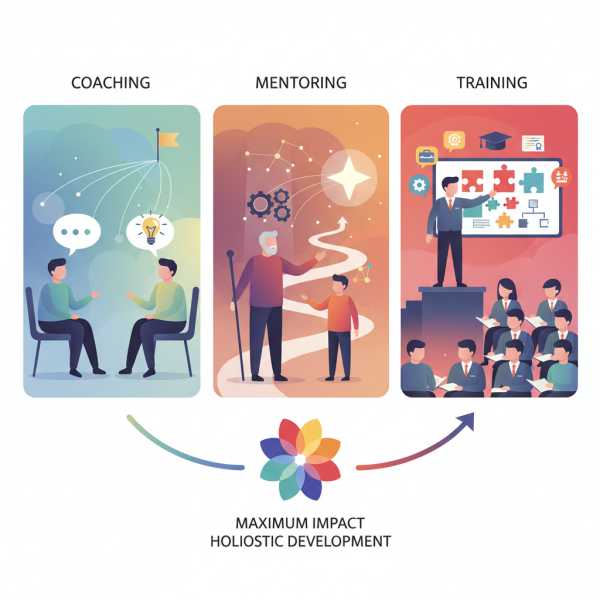
The fundamental differences between these three strategies lie in their approach, focus, and desired outcomes. Coaching empowers the individual to find their own answers, mentoring provides guidance from experience, and training teaches specific skills or knowledge directly.
Consider these distinctions for application:
- When to use Coaching: Ideal for individuals facing performance plateaus, leadership development, navigating career transitions, or needing to enhance problem-solving and decision-making skills. It's most effective when the individual already possesses foundational knowledge but needs help unlocking their potential.
- When to use Mentoring: Best suited for long-term career planning, integrating into a new organizational culture, developing soft skills, or gaining insights from a seasoned professional's journey. It's invaluable for individuals seeking broad professional and personal development over time.
- When to use Training: Essential for onboarding new employees, introducing new software or processes, ensuring compliance, or upskilling a workforce in specific technical or procedural areas. It's the go-to for systematic knowledge and skill transfer.
Choosing the Right Development Strategy
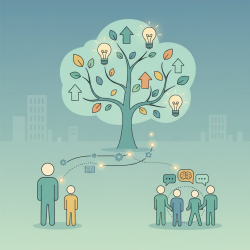
Selecting the most effective development strategy requires a clear understanding of the individual's needs, the desired outcomes, and the broader organizational goals. Is the aim to fix a specific skill deficit (training), guide long-term career growth (mentoring), or empower an individual to reach a specific performance goal (coaching)? Often, a blended approach, integrating elements of all three, yields the most comprehensive and sustainable development. For instance, an employee might receive training on a new software, be mentored by a senior colleague on career progression, and engage in coaching sessions to improve their leadership communication.
Organizations that clearly define the roles of coaches, mentors, and trainers, and implement programs that strategically deploy each, are better positioned to foster a culture of continuous learning and high performance. The investment in understanding these distinctions pays dividends in more effective, targeted, and impactful people development initiatives.
Summary
In conclusion, while coaching, mentoring, and training all contribute significantly to individual and organizational growth, they are distinct processes with unique methodologies and objectives. Coaching focuses on empowering individuals through self-discovery to achieve specific performance goals. Mentoring provides long-term, experienced-based guidance for broader career and personal development. Training is a structured approach for imparting specific skills and knowledge. Recognizing these core differences allows for the strategic application of each method, ensuring that development efforts are precisely aligned with individual needs and organizational aspirations, ultimately leading to more effective and impactful outcomes in professional development.
Comprehension questions
 What is the primary difference in the focus of coaching versus training?How does the duration and nature of the relationship differ between mentoring and coaching?In what scenarios would training be the most appropriate development strategy, and why?Explain how a blended approach, incorporating all three strategies, can be beneficial for employee development.
Community Poll
Next Lesson
Course Contents : Coaching, Mentoring, and Training for Software Engineering Managers
- >> 1.
 Core Differences Between Coaching, Mentoring, and Training