Creating an Environment of Trust and Psychological Safety
- -->> 3. Creating an Environment of Trust and Psychological Safety
What you'll learn
 Understanding Psychological SafetyThe Role of Trust in TeamsPractical Strategies for Cultivating Safety & TrustBenefits: Communication and Innovation
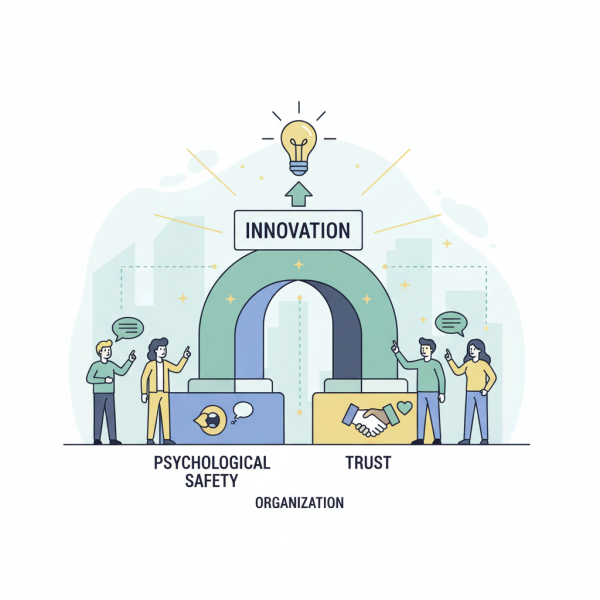
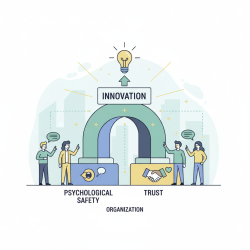
Organizations are constantly seeking ways to enhance performance, drive creativity, and maintain a competitive edge. At the heart of these aspirations lies a critical foundation: psychological safety and trust. These two interconnected elements are not just desirable traits; they are fundamental cornerstones that enable open communication, foster collaboration, and ultimately unlock the full potential for innovation within any team or enterprise.
Understanding Psychological Safety
Psychological safety refers to an environment where individuals feel safe to take interpersonal risks without fear of negative consequences such as embarrassment, rejection, or punishment. It's the belief that one will not be humiliated or penalized for speaking up, admitting mistakes, asking questions, or offering new ideas. When psychological safety is present, team members feel comfortable being themselves, expressing their thoughts candidly, and challenging the status quo constructively.
This sense of safety is paramount for learning and growth. Without it, individuals tend to hold back, self-censor, and avoid potentially uncomfortable but necessary conversations. This stifles the flow of information, prevents the early detection of problems, and limits the exploration of novel solutions, severely hindering a team's ability to adapt and innovate effectively.
The Role of Trust in Teams
While psychological safety focuses on the interpersonal risk-taking within a group, trust is a broader concept that speaks to confidence in the reliability, integrity, and ability of others. In a team context, trust means believing that colleagues and leaders will act with good intentions, keep their commitments, and support one another. It's the bedrock upon which all successful collaborative efforts are built.
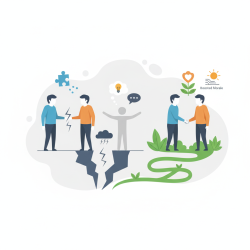
Trust isn't something that appears overnight; it is carefully cultivated through consistent actions and reliable interactions over time. When trust is strong, team members are more willing to share vulnerabilities, delegate tasks effectively, and engage in constructive conflict, knowing that their contributions are valued and respected.
Practical Strategies for Cultivating Safety
Leadership's Impact
Leaders play the most pivotal role in establishing and nurturing psychological safety. Their behavior sets the tone for the entire team or organization. Leaders must actively model vulnerability, admit their own mistakes, and consistently demonstrate an openness to feedback and differing opinions. When leaders show that it is safe to be imperfect, it empowers others to do the same.
It is also crucial for leaders to explicitly invite input and create forums where diverse perspectives are genuinely sought. They must actively listen without judgment, respond constructively to challenges, and ensure that individuals who speak up are treated fairly, regardless of the message content.
Fostering Open Dialogue
- Encourage question-asking: Create an environment where asking clarifying questions is seen as a strength, not a weakness.
- Actively solicit diverse perspectives: Ensure that all voices are heard, especially those that might be quieter or hold differing views.
- Frame failures as learning opportunities: Shift the narrative around mistakes from blame to collective learning and improvement.
- Establish clear communication norms: Define expectations for how discussions will be conducted, ensuring respect and active listening.
Embracing Failure as Learning
True innovation often comes with a degree of risk and the inevitability of some failures. In psychologically safe environments, failures are not met with punitive measures but are instead viewed as valuable data points for learning and iteration. This perspective encourages experimentation and removes the paralyzing fear of making a mistake, which is often a major impediment to trying new approaches.
Building Blocks of Trust
Consistency and Reliability
Trust grows when individuals consistently deliver on their promises and act in predictable, fair ways. Erratic behavior or frequent changes in direction erode trust quickly. Leaders and team members alike must demonstrate reliability in their work, their word, and their decision-making processes.
Competence and Integrity
- Demonstrate capability: Showing that you have the skills and knowledge to perform your role effectively builds confidence in your abilities.
- Act with honesty and transparency: Being truthful and open about intentions, even when delivering difficult news, is fundamental to establishing integrity.
- Respect confidentiality: Protecting sensitive information and respecting privacy builds a reputation for trustworthiness.
- Show empathy and concern: Demonstrating genuine care for colleagues' well-being and professional growth strengthens interpersonal bonds and trust.
Benefits: Communication and Innovation
When psychological safety and trust are deeply embedded in a team's culture, the benefits are profound and far-reaching. Open communication flourishes as individuals feel empowered to share ideas, voice concerns, and provide honest feedback without reservation. This leads to more robust discussions, better problem-solving, and more informed decision-making.
Innovation naturally follows. Teams that are safe and trusting are more willing to experiment, challenge assumptions, and explore unconventional solutions. The fear of failure is minimized, encouraging a culture of continuous learning and creative exploration, ultimately leading to breakthrough ideas and sustained organizational success.
Summary
Cultivating psychological safety and building trust are critical for creating dynamic, high-performing teams capable of continuous innovation. Psychological safety allows individuals to take interpersonal risks and express themselves authentically, while trust ensures confidence in colleagues' reliability and integrity. Leaders are instrumental in modeling these behaviors and creating environments where open dialogue and learning from failures are encouraged. Together, these cornerstones empower teams to communicate freely, collaborate effectively, and drive the innovation necessary for growth and success in the modern world.
Comprehension questions
 What is psychological safety and why is it important for learning and growth within a team?How does trust differ from psychological safety, and what key elements contribute to building trust among team members?What specific actions can leaders take to cultivate psychological safety and foster open dialogue within their teams?How do psychological safety and trust collectively contribute to enhanced communication and innovation within an organization?
Review Quiz
Next Lesson

Course Contents : Building High Performing Dev Teams
- >> 3.
 Creating an Environment of Trust and Psychological Safety