Understanding Agile Principles for Team Velocity
- -->> 10. Understanding Agile Principles for Team Velocity
What you'll learn
 Understanding Agile Principles for Team VelocityFostering Adaptability with Agile MethodologiesElevating Product Quality through Agile PracticesKey Agile Methodologies in Practice
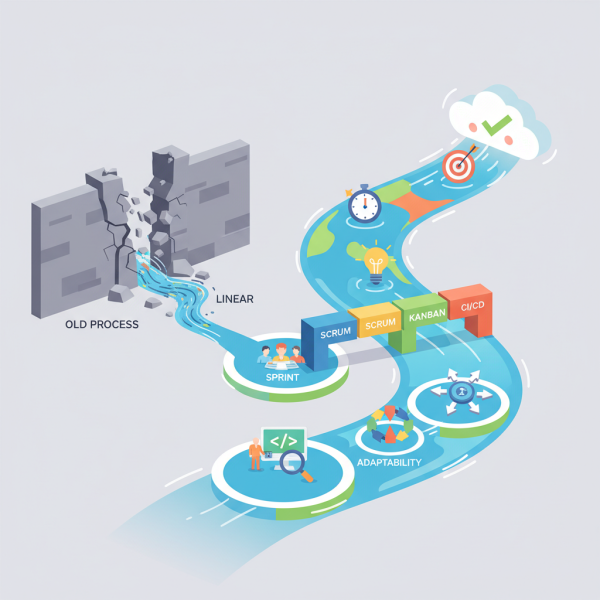
Agile methodologies have revolutionized how teams approach product development, moving away from rigid, linear processes towards a more flexible and responsive paradigm. This shift is not merely a trend but a fundamental reorientation designed to tackle the complexities and rapid changes inherent in modern markets. By embracing agile principles, organizations can unlock significant improvements in team velocity, enhance their ability to adapt to evolving requirements, and consistently deliver higher quality products that genuinely meet customer needs. This article explores how applying agile frameworks effectively transforms development cycles, empowering teams to achieve greater efficiency and deliver superior value.
Understanding Agile Principles for Team Velocity
Velocity in agile refers to the amount of work a team can complete in a single sprint or iteration. Enhancing velocity isn't about working faster, but smarter, by optimizing processes and removing impediments. This strategic focus ensures sustained productivity without sacrificing quality.
- Iterative Development: Agile promotes breaking down large projects into smaller, manageable iterations, typically called sprints. Each sprint delivers a potentially shippable increment of the product. This approach allows teams to focus intensely on a limited scope, reducing cognitive load and accelerating the completion of specific features.
- Time-boxed Sprints: Sprints are fixed-duration cycles, usually 1-4 weeks. This time-boxing creates a sense of urgency and discipline, forcing teams to prioritize and complete work within defined constraints. It helps prevent scope creep and keeps the team aligned on immediate goals, contributing directly to predictable velocity.
- Daily Stand-ups: Short, daily meetings where team members synchronize their activities. They typically answer: What did I do yesterday? What will I do today? Are there any impediments? This transparency quickly surfaces blockers, allowing the team or scrum master to address them promptly, maintaining workflow and preventing delays that would otherwise impact velocity.
Fostering Adaptability with Agile Methodologies
Adaptability is a cornerstone of agile, enabling teams to pivot quickly in response to new information or changing market conditions. This inherent flexibility allows organizations to remain competitive and relevant in dynamic environments.
- Responding to Change: Agile values responding to change over following a rigid plan. This means requirements can evolve throughout a project, and the team is equipped to incorporate new insights without derailing progress. Continuous feedback loops from stakeholders are vital for this adaptability, ensuring the product always aligns with current needs.
- Continuous Feedback Loops: Regular interactions with stakeholders, through sprint reviews and demos, provide early and frequent feedback. This allows the team to validate assumptions, identify misunderstandings, and refine the product based on real-world input, ensuring the product remains relevant and desirable throughout its development.
- Cross-functional Teams: Agile teams are composed of individuals with diverse skills necessary to complete a project end-to-end. This self-organizing structure reduces dependencies on external teams, streamlines communication, and empowers the team to make decisions quickly, enhancing their collective ability to adapt and respond efficiently.
Elevating Product Quality through Agile Practices
Agile is not solely about speed; it places a strong emphasis on delivering high-quality products that users will value. Quality is embedded into every stage of the development process, not merely checked at the end.
- Definition of Done (DoD): A clear, shared understanding of what constitutes a complete and releasable increment of work. The DoD typically includes criteria for testing, documentation, and code quality. Adhering to a robust DoD ensures that quality is built in at every step, rather than being an afterthought, leading to more reliable products.
- Continuous Integration/Delivery (CI/CD): These practices involve frequently merging code changes into a central repository, followed by automated builds and tests (CI), and often automated deployment to various environments (CD). CI/CD reduces integration issues, catches bugs early, and ensures the product is always in a potentially shippable state, significantly improving overall quality and reducing time-to-market.
- Testing Throughout the Lifecycle: Quality assurance is not a separate phase at the end of development. Agile advocates for continuous testing, where developers write unit tests, integration tests, and acceptance tests as part of their development process. Testers are embedded within the team, collaborating from the start to identify and resolve issues proactively. This "fail fast" approach minimizes technical debt and enhances product robustness.
Key Agile Methodologies in Practice
While principles form the foundation, various methodologies provide practical frameworks for implementation, each with its unique strengths and suitable applications.
Scrum
Scrum is one of the most popular agile frameworks, organizing work into sprints. It defines specific roles, events, and artifacts to manage complex product development. Roles include the Product Owner, Scrum Master, and Development Team. Key events are Sprint Planning, Daily Scrum, Sprint Review, and Sprint Retrospective. Artifacts include the Product Backlog, Sprint Backlog, and Increment. Scrum is highly effective for teams needing structured iteration and continuous improvement, especially in environments with evolving requirements.
Kanban
Kanban is focused on visualizing workflow, limiting work in progress (WIP), and maximizing efficiency. Kanban boards provide a clear overview of tasks moving through different stages, allowing for immediate identification of bottlenecks. By addressing these bottlenecks, teams can achieve a smooth, continuous flow of work. Kanban is particularly suited for maintenance teams, operational teams, or projects with frequently changing priorities and a need for quick turnaround times, as it emphasizes continuous flow over fixed iterations.
Summary
Implementing agile principles and methodologies offers a powerful pathway to optimizing team performance and product outcomes. By embracing iterative development, time-boxed sprints, and daily stand-ups, teams can significantly boost their velocity. Adaptability is fostered through valuing change, continuous feedback, and cross-functional team structures. Furthermore, product quality is elevated by establishing a clear Definition of Done, implementing CI/CD pipelines, and integrating continuous testing throughout the development lifecycle. Frameworks like Scrum and Kanban provide practical roadmaps for applying these principles, ultimately enabling organizations to navigate complex environments, deliver value consistently, and achieve sustained success in an ever-evolving market.
Comprehension questions
 What are the key benefits of agile methodologies in product development?How do iterative development and daily stand-ups improve team velocity in agile?In what ways do agile practices foster adaptability within development teams?How do the 'Definition of Done' and CI/CD practices contribute to elevating product quality?
Review Quiz
Next Lesson

Course Contents : Building High Performing Dev Teams
- >> 10.
 Understanding Agile Principles for Team Velocity