Removing Common Time Sinks and Reclaiming your Time
- -->> 4. Removing Common Time Sinks and Reclaiming your Time
What you'll learn
 Time Management StrategiesImpact of InterruptionsEffective Meeting PracticesDelegation and Empowerment
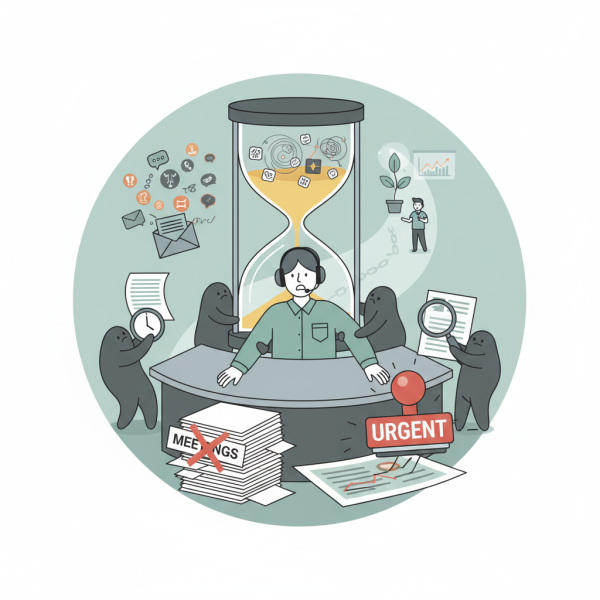
As a software engineering manager, your role is a demanding blend of technical leadership, team development, and strategic planning. Amidst this complexity, it’s remarkably easy for your precious time to erode, swallowed by a multitude of tasks that seem urgent but offer little strategic value. Identifying and mitigating these common time sinks is crucial for maintaining productivity, fostering team growth, and achieving your long-term objectives. This article delves into the primary challenges that often cause engineering managers to lose valuable time, offering insights on how to navigate these pitfalls effectively.
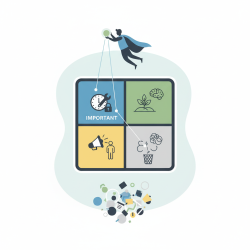
The Lure of Unimportant and Non-Urgent Tasks
One of the most insidious time sinks is the tendency to gravitate towards tasks that are either unimportant, non-urgent, or both. These often appear manageable and provide a sense of accomplishment, but they detract significantly from high-impact work. For an engineering manager, this might involve getting deeply entangled in minor code review details that a senior engineer could handle, endlessly refining internal documentation that rarely sees widespread use, or over-optimizing a process that provides only marginal gains.
The trap lies in the immediate gratification of checking off a task, even if that task doesn't move the needle on your most critical priorities. This often means deferring strategic planning, one-on-one coaching, or architecture discussions—tasks that are highly important but rarely feel "urgent" until it's too late. The cumulative effect is a manager constantly busy but rarely impactful, a bottleneck to their team's autonomy, and a contributor to their own burnout.
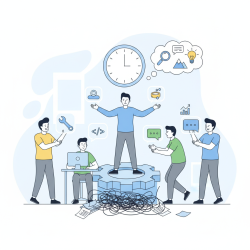
The High Cost of Interruptions
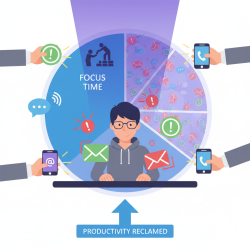
In the always-on digital workplace, interruptions are a constant companion for engineering managers. Slack messages, spontaneous desk-side questions, unscheduled calls, and email notifications all compete for your attention. While many of these interactions are necessary for collaboration, their cumulative effect can be devastating to productivity, especially when you’re attempting to engage in deep, focused work.
The primary cost of an interruption isn't just the time spent on the interruption itself. It's the significant "context switching" penalty. When you're pulled away from a complex problem, it takes a considerable amount of time—often 15 to 25 minutes, according to various studies—to fully regain your focus and pick up where you left off. This constant mental whiplash leads to fragmented work, reduced quality, and an inability to dedicate sufficient time to strategic thinking or complex problem-solving. It perpetuates a feeling of being reactive rather than proactive.
Common sources of interruptions include:
- Frequent, non-critical Slack or chat messages
- Unscheduled drop-in questions from team members
- Excessive email notifications throughout the day
- Unexpected calls or video meeting requests
- Notifications from various project management tools
Meeting Overload and Inefficiency
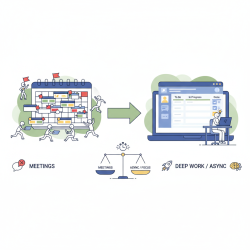
Meetings are a necessary component of collaborative work, but they are also notorious time sinks for engineering managers. It's easy to find your calendar completely booked, leaving little to no time for actual work. The problem isn't always the quantity of meetings, but often their quality and necessity.
Inefficient meetings can manifest in several ways: a lack of clear agenda and objectives, discussions that derail into unrelated topics, attendees who don't truly need to be present, or topics that could have been resolved more efficiently through asynchronous communication. Each poorly run meeting not only wastes the time of the manager but also that of everyone else in attendance, creating a ripple effect of lost productivity across the team.
To combat this, a critical approach to meeting hygiene is essential:
- Question every meeting invitation: Is your attendance truly required, or can you delegate?
- Insist on clear agendas and stated objectives for every meeting.
- Suggest asynchronous communication (e.g., a written update or a shared document) as an alternative.
- Time-box discussions rigorously to ensure focus and efficient use of everyone's time.
Lack of Delegation and Empowerment
A common pitfall for engineering managers, particularly those who have risen from individual contributor roles, is the reluctance to delegate. It often feels quicker and easier to "just do it myself" rather than taking the time to explain, coach, and oversee. While this might save a few minutes in the short term, it creates a massive time sink in the long run.
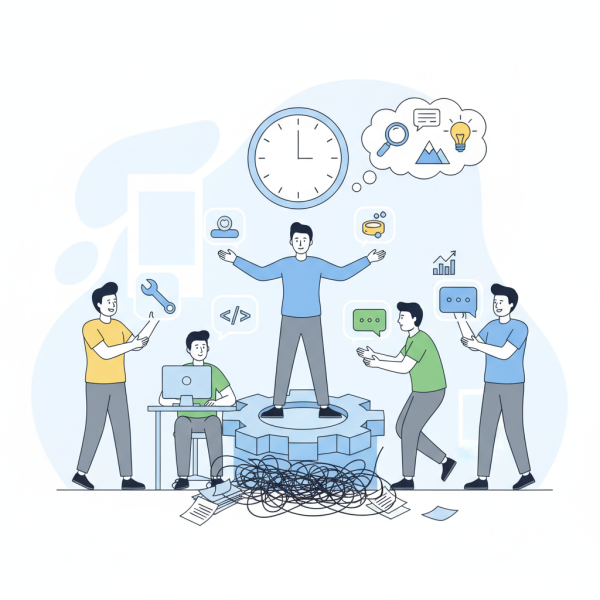
By failing to delegate effectively, you stunt the growth of your team members, preventing them from developing new skills and taking on more responsibility. This ensures your plate remains perpetually full of tactical work, leaving little room for the strategic leadership and mentorship that are central to your role. Moreover, it makes you an unavoidable bottleneck for many operations, slowing down the entire team and reducing overall agility. Investing time in effective delegation and coaching is an investment in your team's future and your own capacity to lead strategically.
Reactive Mode vs. Proactive Planning
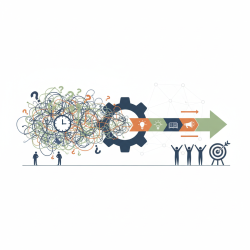
The fast-paced nature of software development can easily pull an engineering manager into a constant state of reactivity. Urgent bugs, unexpected project shifts, and immediate team concerns often dominate the day, making it challenging to carve out time for proactive planning, strategic initiatives, and long-term vision setting. Living in reactive mode means constantly putting out fires instead of building fire prevention systems.
This perpetual state of reaction is a significant time sink because it traps you in a cycle of managing crises rather than preventing them. It consumes mental energy and leaves little room for the deep thinking required to anticipate future challenges, optimize processes, or align your team with broader organizational goals. Breaking this cycle requires intentional effort to schedule and protect time for proactive work, even when immediate demands are pressing.
Summary
The role of a software engineering manager is inherently challenging, demanding keen oversight of technical, human, and strategic elements. Overcoming common time sinks—such as getting bogged down in unimportant tasks, battling constant interruptions, navigating inefficient meetings, failing to delegate effectively, and being trapped in reactive mode—is paramount for sustained success. By consciously identifying these challenges and implementing proactive strategies, engineering managers can reclaim their time, enhance their productivity, empower their teams, and ultimately drive greater strategic impact for their organizations.
Comprehension questions
 How do interruptions impact an engineering manager's productivity beyond the immediate time spent on the interruption?What are three common issues that make meetings a significant time sink for engineering managers?Why is a lack of effective delegation considered a time sink for engineering managers, despite appearing to save time initially?
Review Quiz
Next Lesson
Course Contents : Improving Time Management for Engineering Managers
- >> 4.
 Removing Common Time Sinks and Reclaiming your Time